
History as Strategy
Ancient Claims and Modern Power in the Middle East

Introduction
“The tradition of all dead generations weighs like a nightmare on the brains of the living.”
— Karl Marx (1818–1883), German philosopher and political economist
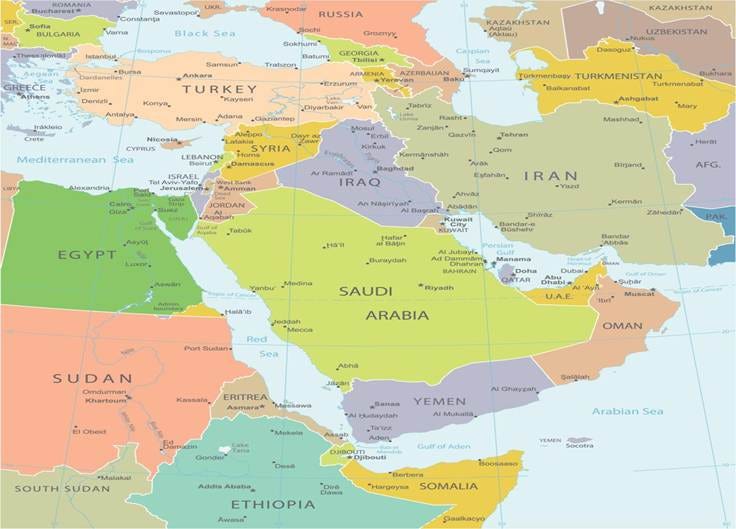
“The geographic setting of a conflict is shaped by history, diplomacy, and power.”
In the modern international system, territorial legitimacy is grounded in contemporary realities: existing populations, recognised borders, and functioning states. Ancient history may shape identity, but modern sovereignty rests on present populations and political institutions. International law avoids this logic because history contains many overlapping layers of settlement and rule. In the Middle East, one of the most consequential political projects of the modern era rests partly on such historical narratives. Zionism emerged in late-nineteenth-century Europe as a secular nationalist movement seeking a Jewish state, drawing upon the idea of historical return to the ancient land of Israel as a powerful cultural foundation.
The difficulty arises when ancient narratives intersect with the political realities of the present. Palestine was not an empty land awaiting restoration of a lost kingdom. By the nineteenth century, the region was inhabited largely by Arabic-speaking Muslim and Christian communities whose social and cultural life had evolved over generations within the Ottoman world. The creation of Israel in 1948 transformed this landscape and produced one of the most persistent geopolitical conflicts of the modern era.
The unresolved status of the Palestinian territories illustrates the continuing tension between historical narrative and contemporary law. International institutions, including the United Nations, regard Israeli settlements in territories captured in 1967 as violations of the legal framework governing military occupation.
This territorial dispute now intersects with a broader regional power struggle. Israel has repeatedly demonstrated a willingness to use military force to prevent potential rivals in the Middle East from developing capabilities that could challenge its strategic dominance. It forms part of a broader strategic pattern in which territorial expansion, ideological claims to historical entitlement, and the pursuit of overwhelming military superiority intersect. Understanding how these forces interact is essential to explaining both the persistence of the Israeli-Palestinian conflict and the widening regional confrontation now unfolding across the Middle East.
The modern state of Israel emerged from twentieth-century political decisions that invoked ancient historical narratives to legitimise a new territorial project in the Middle East. Supported by Western powers through imperial diplomacy and later international endorsement, this project displaced an existing population and produced a political order defined by permanent territorial contestation. The expansion of settlements, the rejection of Palestinian sovereignty, and confrontation with regional rivals such as Iran point to a strategy aimed not simply at security but at shaping the balance of power across the Middle East. The instability that followed reflects the consequences of founding a modern state on contested historical claims and geopolitical calculation rather than a durable political settlement.
The sections that follow examine how historical narrative, imperial diplomacy, territorial expansion, and military strategy combined to shape the modern conflict.
1. The Past as Political Authority
“Who controls the past controls the future.” — George Orwell (1903–1950), English writer

“Past as Political Authority”
No modern state claims sovereignty based on events three thousand years old. Contemporary political legitimacy rests instead on present populations, recognised borders, and functioning institutions. Claims based on divine grant raise an additional difficulty. Religious traditions may describe land as promised or sanctified, but political authority in the modern world cannot rest on theological assertion. The question immediately arises: whose god, and whose interpretation of divine will? Different faiths hold competing sacred narratives about the same territory. For this reason, modern political systems treat religious belief as a matter of identity and culture rather than a legal basis for sovereignty.
International law developed to prevent the revival of ancient territorial claims that would destabilise regions. If historical possession alone determined sovereignty, countless peoples could assert rights over lands long inhabited by others. Such claims are dismissed because history contains many overlapping layers of settlement, conquest, and migration. But in the modern Middle East, ancient narratives have been transformed into political arguments.
The international system that emerged after the seventeenth century was designed to avoid precisely these kinds of disputes. The treaties that concluded the Peace of Westphalia in 1648 helped establish the principle that political authority rests with recognised states exercising sovereignty over defined territories. In the twentieth century, these ideas became embedded in the institutions of the United Nations, which recognise states based on contemporary political realities rather than ancient historical memory.
History rarely belongs to a single people. Territories pass through many hands over centuries, shaped by migration, empire, and war. The eastern Mediterranean illustrates this complexity, having been governed by the Romans, the Byzantines, the Arab caliphates, the Crusader kingdoms, and the Ottoman Empire. To privilege one ancient moment above all others ignores the long evolution of the societies that followed.
Modern diasporas illustrate the same principle: ancestral memory may shape identity, but sovereignty rests on present populations and political institutions.
Against this background, the emergence of Zionism in late nineteenth-century Europe introduced a striking exception to the prevailing logic of modern statehood. Zionism arose as a nationalist movement among European Jewish communities who sought to establish a state of their own in response to persistent persecution and exclusion. Like many nationalist movements of the period, it drew upon historical memory to construct a narrative of peoplehood and homeland. The narrative centred on the ancient kingdoms of Israel and Judah, more than two thousand years ago. The political project that followed was framed not as colonisation or migration, but as a return.
The land in question was not an empty stage upon which history could be replayed. By the late nineteenth century, Palestine was inhabited by established communities whose languages, cultures, and institutions had developed over generations within the Ottoman world. This tension would shape the conflict that followed.
The transformation of historical memory into political authority marked the beginning of a new phase in Middle Eastern politics. What began as a nationalist movement rooted in European intellectual and political currents soon intersected with the strategic interests of imperial powers and the diplomatic structures that emerged after the First World War. Those international decisions would convert ideological aspiration into geopolitical reality.
History became the language of legitimacy; the power that translated that narrative into political reality emerged through imperial diplomacy.
2. Zionism: A Modern Political Movement
“We shall endeavour to secure the establishment in Palestine of a national home for the Jewish people.” — Arthur Balfour (1848–1930), British Foreign Secretary.
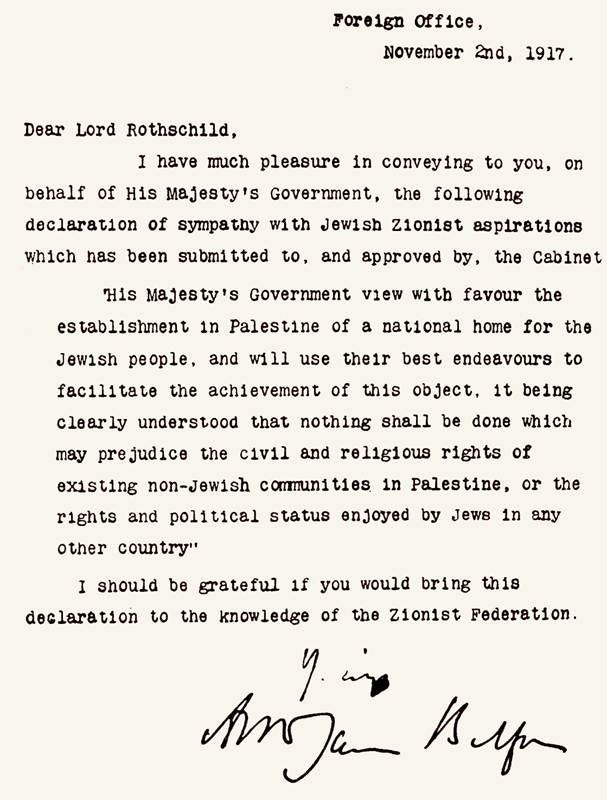
“Palestine for the taking”
The shift of Zionism from an ideological goal to a political reality was driven not by ancient claims but by 20th-century diplomacy and imperial influence. The pivotal event was the 1917 Balfour Declaration, a short letter from the British Foreign Secretary, Arthur Balfour, supporting the establishment of a “national home for the Jewish people” in Palestine. At that time, the region was part of the Ottoman Empire, and Britain had not yet gained control. The declaration was more than a gesture of sympathy for a nationalist movement; it was a strategic move made during World War I, as imperial powers were already planning the post-war political landscape of the Middle East following the expected Ottoman collapse.
Britain’s support for Zionism was closely tied to imperial strategy. Control of Palestine strengthened Britain’s position in the eastern Mediterranean and along imperial routes to India. Through the League of Nations mandate system, Britain governed Palestine while facilitating Jewish immigration and the development of Zionist political institutions.
Palestine was not an empty land awaiting settlement. The territory was inhabited largely by Arabic-speaking Muslim and Christian communities whose social and economic life had developed over generations within the Ottoman world.
Zionism itself had emerged primarily within European political culture. Its leaders drew upon the language of nineteenth-century nationalism, which held that a people sharing a common identity should possess a state of its own. What distinguished the movement was its reliance on a historical narrative stretching back two millennia and its focus on a territory where the majority of the population did not belong to the nationalist movement advocating statehood.
Western endorsement gave the movement a degree of international legitimacy that few other nationalist projects possessed. Diplomatic recognition, financial support, and the administrative authority of the British mandate enabled Zionist institutions to develop in ways that would have been impossible without imperial backing. This convergence of ideological aspiration and imperial strategy reshaped Palestine’s political landscape and laid the groundwork for the creation of a new state three decades later.
Seen in this light, the emergence of Israel was not simply the restoration of an ancient polity. It was the product of modern political decisions made within the context of imperial diplomacy and global war. The language of historical return provided moral justification, but the decisive factor was the alignment of Zionist ambitions with the strategic interests of powerful states.
Ancient memory supplied the justification; imperial power created the political conditions that would soon transform Zionist aspiration into statehood.
3. International Endorsement and the Creation of Israel
“The world will say that we are aggressors… but if we do not do it, we shall not have a state.”
— David Ben-Gurion (1886–1973), Israel’s first Prime Minister
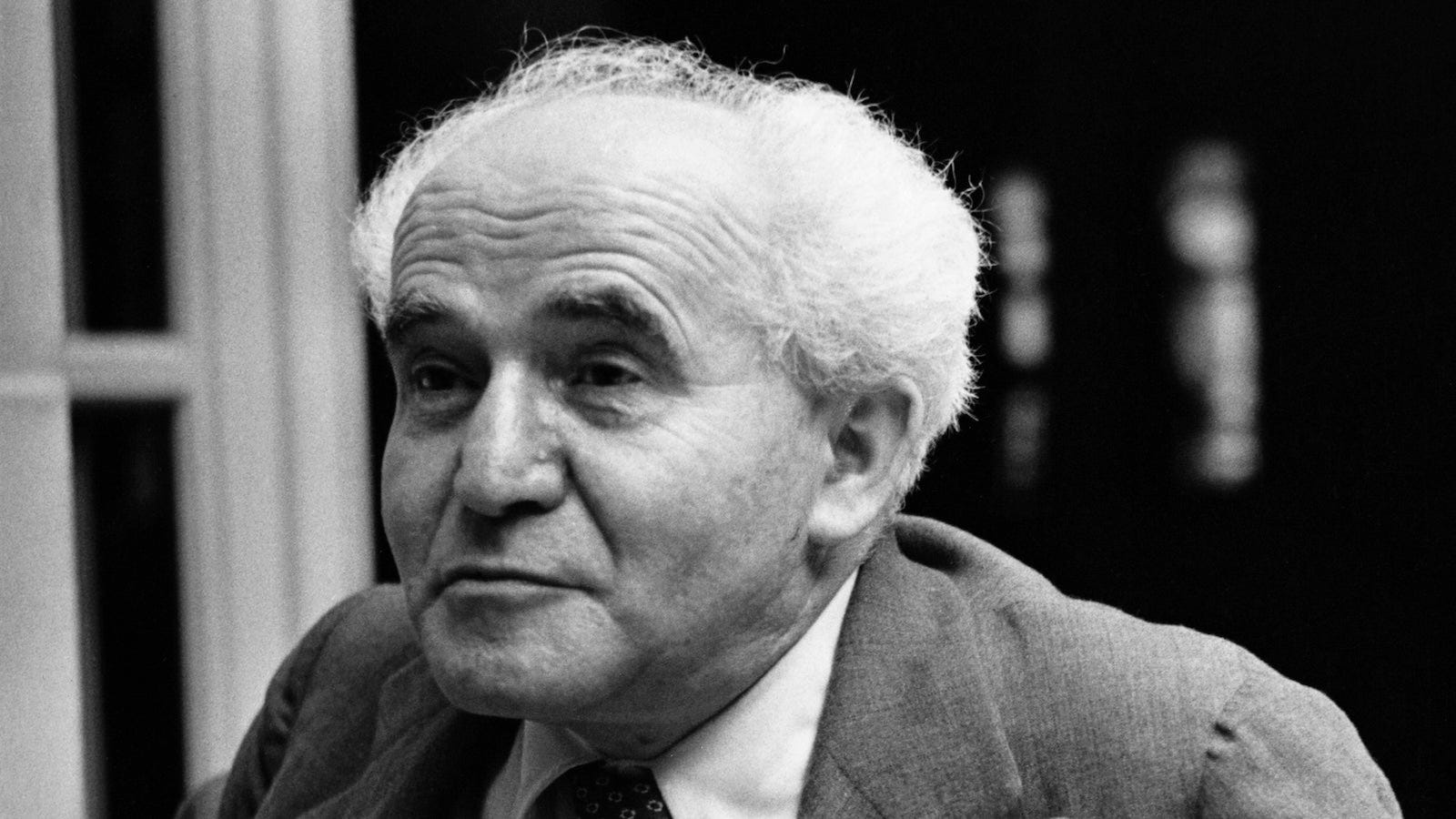
“Ben Gurion”
The transition from political aspiration to sovereign state occurred in the turbulent aftermath of the Second World War. By the mid-1940s, Britain had grown increasingly unable to manage rising tensions in Palestine between Jewish and Arab communities. The issue was eventually transferred to the United Nations, which in 1947 proposed partitioning the territory into separate Jewish and Arab states. The plan envisioned two independent political entities with Jerusalem placed under international administration. For supporters of Zionism, the proposal represented the first formal international endorsement of Jewish statehood. For the Arab population of Palestine, it represented the division of their homeland without their consent.
The partition plan immediately exposed the deep contradictions within the political settlement that had developed during the British mandate. Jewish communities constituted roughly one-third of the population of Palestine, but were allocated a majority of the proposed territory under the plan. Arab leaders rejected the proposal because it violated the principle of self-determination for the existing population. Violence between the two communities intensified rapidly, transforming the political dispute into a full-scale civil conflict even before the British withdrawal from the territory was complete.
In May 1948, Zionist leaders declared the establishment of Israel. Within hours, neighbouring Arab states intervened militarily, and the conflict expanded into the first Arab–Israeli war. By the end of the fighting, the new Israeli state controlled substantially more territory than had been allocated under the original partition plan. The war also produced one of the defining human consequences of the conflict: the large-scale displacement of Palestinians from towns and villages across the territory. Hundreds of thousands fled or were expelled during the fighting, creating a permanent refugee population.
For Palestinians, this displacement became known as the Nakba, meaning “catastrophe.” Hundreds of thousands became refugees in neighbouring territories, creating one of the most enduring consequences of the conflict.
International recognition of the new state followed quickly. Several major powers acknowledged Israel within days of its declaration of independence, granting it diplomatic legitimacy despite the unresolved conflict on the ground. But the state that emerged did so within a landscape already fractured by war, displacement, and competing claims to the same territory. The absence of a political settlement acceptable to both populations ensured that the conflict would persist long after the war itself ended.
The foundations of the state were inseparable from the conflict that accompanied its creation. Israel emerged through a combination of international endorsement, military victory, and demographic transformation. Rather than resolving the political contradictions that had accumulated during the mandate period, the events of 1948 entrenched them within the new regional order.
The state was recognised internationally, but its borders were ultimately shaped by war, leaving territorial questions unresolved.
4. Occupation and Settlement
“Between the sea and the Jordan, there will only be Israeli sovereignty.”
— Benjamin Netanyahu (b. 1949), Prime Minister of Israel
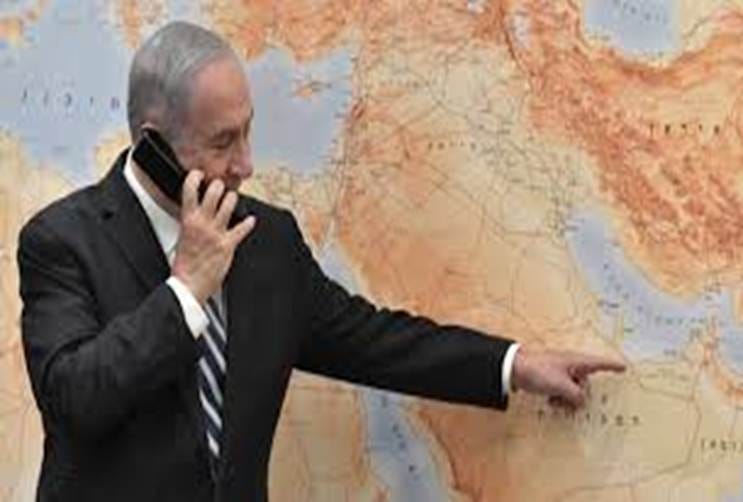
“Unto thy seed have I given this land, from the river of Egypt unto the great river, the river Euphrates.”
The territorial dimension of the Israeli–Palestinian conflict was fundamentally reshaped by the Six-Day War. In the course of six days, Israel defeated neighbouring Arab armies. It took control of several territories: the West Bank and East Jerusalem from Jordan, Gaza and the Sinai Peninsula from Egypt, and the Golan Heights from Syria. While some of the captured territories were later returned or placed under limited Palestinian administration, the West Bank and East Jerusalem became the central focus of a long-term dispute over sovereignty, occupation, and settlement.
According to international law, territories captured during war are typically deemed occupied until their status is settled through negotiations or formal agreements. The international community considers the West Bank as occupied territory. The creation of Israeli civilian settlements in the area has become one of the most debated issues in the conflict. Numerous governments and international legal organisations have contended that moving a civilian population into occupied territory breaches the principles outlined in the Fourth Geneva Convention.
Despite these legal objections, settlement expansion has continued for decades. What began as a limited number of communities after the Six-Day War evolved into a network of settlements across large portions of the West Bank, supported by roads, military protection, and administrative structures closely integrated with Israel while separating them from surrounding Palestinian communities.
Supporters of the settlement project justify it on grounds of security concerns and historical claims. At the same time, critics argue that continued expansion makes a viable Palestinian state increasingly difficult and entrenches a permanent system of unequal political control within the territory.
The legal and political debate surrounding settlements reflects a deeper disagreement about the nature of the occupation itself. Israeli governments have described the territory as disputed rather than occupied, arguing that its final status must be determined through negotiations rather than predetermined legal definitions. Much of the international community, however, maintains that occupation law applies regardless of competing historical claims or security concerns. This disagreement has produced a persistent gap between international legal judgments and the realities on the ground.
Over the decades, settlement expansion has become one of the most visible indicators of the conflict’s evolution. Each new settlement reshapes the landscape and complicates prospects for a negotiated settlement. What was once described as a temporary occupation increasingly appears to many observers as a process of long-term territorial consolidation.
Legal rulings describe the territory as occupied; political reality has instead consolidated Israeli control across much of the land.
5. Expansionist Language in Israeli Politics
“This land is ours. All of it is ours.”
— Tzipi Hotovely B. 1978 - Israel’s Ambassador to the U.K. 2020 - 2025.
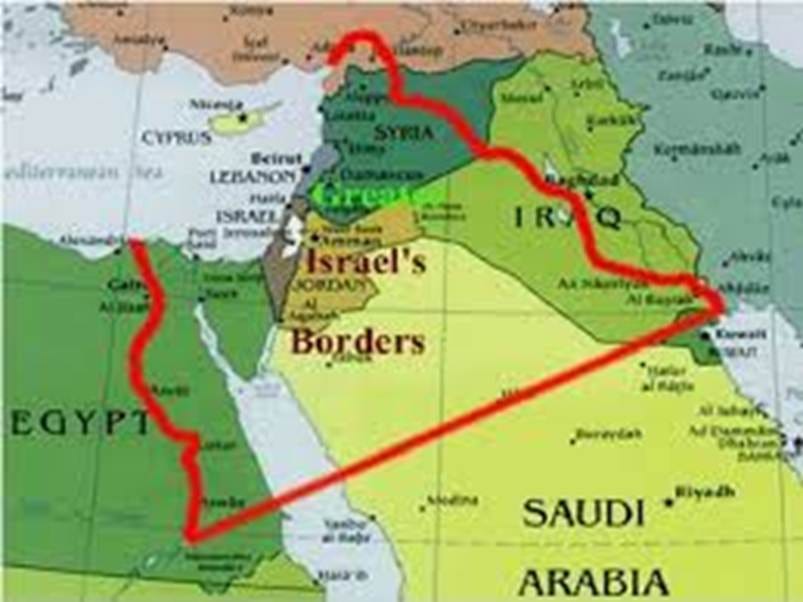
“Greater Israel: This land is ours. All of it is ours.”
Political language reveals the deeper ideological direction of a state. In Israel, statements from influential political leaders increasingly reflect a current within Israeli politics that rejects the idea of Palestinian sovereignty altogether. While earlier Israeli governments publicly supported negotiations aimed at territorial compromise, several contemporary figures openly advocate permanent Israeli control over the land between the Mediterranean Sea and the Jordan River. Their rhetoric illustrates how the debate has shifted from the possibility of partition toward competing claims of exclusive sovereignty.
One of the most prominent voices in this shift has been Bezalel Smotrich, a leading figure within the religious-nationalist movement. Smotrich has repeatedly argued that the Palestinian national claim to the land lacks legitimacy and has promoted policies aimed at expanding Israeli sovereignty across the West Bank. In speeches and political platforms, he has framed the territory not as occupied land but as an integral part of the historic land of Israel. This position rejects the diplomatic framework that has dominated international discussion for decades, in which the West Bank is widely regarded as the basis for a future Palestinian state.
A similar perspective appears in the rhetoric of Itamar Ben-Gvir, whose political career has been associated with hardline nationalist positions. Ben-Gvir has advocated stronger Israeli control over contested areas, expanded settlement activity, and policies that critics argue would further marginalise Palestinian political rights. While once considered part of the extreme fringe of Israeli politics, figures with such views now hold influential positions within governing coalitions. Their participation in government reflects the growing influence of religious-nationalist ideology within Israeli political life.
These statements reveal a transformation in the discourse surrounding the conflict. Earlier Israeli leaders justified territorial control through security arguments, presenting occupation as a temporary condition shaped by unresolved war. The newer rhetoric increasingly frames the issue as one of historical and religious entitlement. Within this framework, the territory itself is treated not as a subject for negotiation but as an indivisible inheritance. The language of sovereignty replaces the language of compromise.
The settlement movement that emerged after the Six-Day War has also reshaped Israeli politics. Communities established in the occupied territories have become an influential political constituency, strengthening parties that reject territorial concessions.
The growing prominence of expansionist rhetoric has significant consequences for the prospects of resolving the conflict. When leading political figures openly reject the possibility of Palestinian statehood, the diplomatic framework that guided earlier negotiations becomes increasingly difficult to sustain. Statements that describe the entire territory as belonging exclusively to one side signal a departure from the premise that two national communities might share the land through political compromise.
Political rhetoric increasingly mirrors territorial policy, asserting sovereignty where compromise once defined the debate.
6. Military Dominance as Regional Strategy
“We will not allow any enemy to acquire weapons of mass destruction.”
— Menachem Begin (1913–1992), Prime Minister of Israel
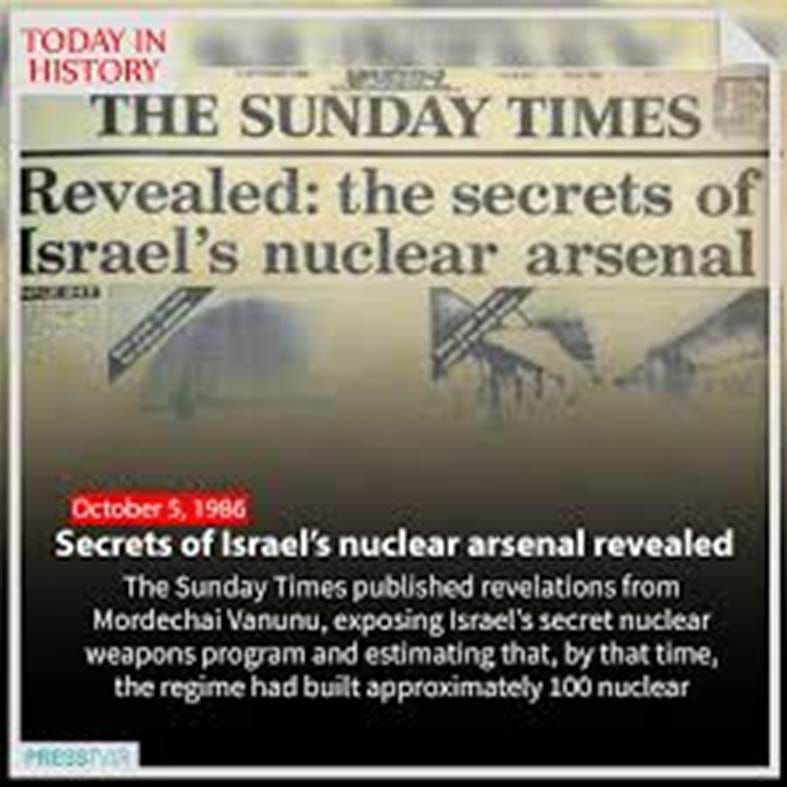
“No-one Except Us”
Israel’s strategy of maintaining decisive military superiority in the Middle East extends beyond conventional forces. It also includes a nuclear capability that has remained deliberately ambiguous for decades. Israel has never officially confirmed possessing nuclear weapons, nor has it denied the capability. This policy of deliberate ambiguity allows Israel to benefit from nuclear deterrence while avoiding the diplomatic and legal consequences that would accompany formal acknowledgement of its arsenal.
The institutional reason this programme operates outside international inspection regimes is straightforward. Israel has never signed the Nuclear Non-Proliferation Treaty. States that join the treaty agree to accept inspections by the International Atomic Energy Agency to ensure their nuclear programmes remain civilian. Countries that do not sign the treaty are not legally bound to submit their facilities to these inspections. Israel occupies a unique position: widely believed to possess nuclear weapons while remaining outside the treaty system that governs most of the world’s nuclear technology.
The origins of Israel’s nuclear programme date to the late 1950s, when cooperation with France helped construct the reactor at Dimona in the Negev desert. From that point onward, Israeli leaders pursued what later became known as a doctrine of strategic deterrence. The existence of a nuclear capability, even if undeclared, ensured that no coalition of neighbouring states could threaten the survival of the Israeli state. The doctrine rested on a simple premise: overwhelming military superiority would deter adversaries.
What makes the situation politically unusual is not simply the existence of the arsenal but the international environment surrounding it. Israel’s nuclear programme has largely avoided the level of scrutiny applied to other states’ nuclear ambitions. Diplomatic protection, particularly from the United States, has prevented sustained international pressure for inspections or disarmament. As a result, Israel maintains a nuclear deterrent while remaining outside the inspection system applied to most other states.
The nuclear dimension also intersects with a broader strategic doctrine sometimes described as the Begin Doctrine, named after Prime Minister Menachem Begin. This doctrine holds that Israel will act pre-emptively to prevent hostile states from acquiring weapons of mass destruction. The logic has guided several major military operations, including the destruction of Iraq’s nuclear reactor in 1981 and the strike on a suspected Syrian reactor in 2007. These actions reflected a consistent strategic principle: no rival power in the region should be allowed to reach military parity with Israel.
Within this framework, the confrontation with Iran becomes easier to interpret. A nuclear-capable Iran would fundamentally alter the balance of power in the Middle East and challenge Israel’s long-standing position of strategic military superiority. The struggle over Iran’s nuclear programme is not simply a dispute about weapons technology. It represents a contest over regional dominance and the future distribution of power across the Middle East.
Strategic supremacy, once established, requires confronting potential rivals before they can alter the regional balance of power.
7. Iran and the Future of the Middle East
“They were going to attack us… so we got in first.”
— Donald Trump (b. 1946), 45th and 47th President of the United States
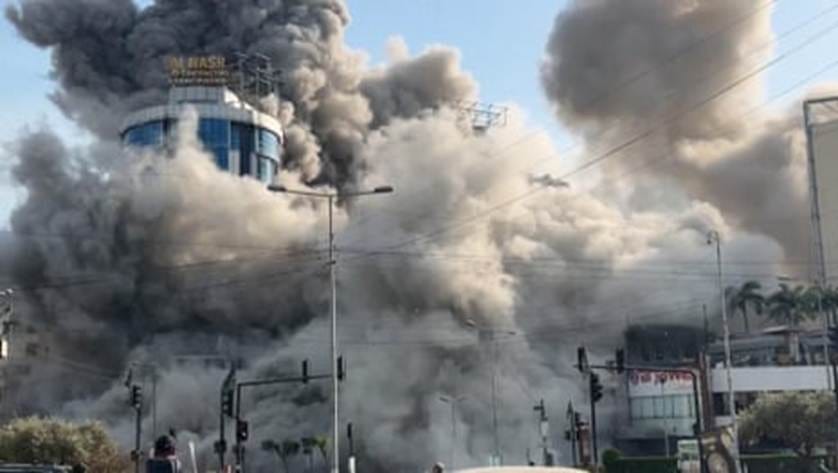
“We Got Them First”
The confrontation with Iran brings the argument of this essay into the present. For decades, Israel has pursued a strategic doctrine aimed at preventing any regional rival from acquiring the military capability to threaten its dominance. The confrontation with Iran represents the most consequential application of that doctrine because Iran is not a minor regional actor but a large and influential state with extensive political, military, and economic connections across the Middle East.
Iran poses a more significant challenge than previous adversaries due to its regional alliances and political influence in Iraq, Syria, and Lebanon.
Close political coordination between Israel and the United States has also shaped the escalation. Over the past year, Israeli Prime Minister Benjamin Netanyahu and U.S. President Donald Trump have met repeatedly, holding a series of high-level discussions focused largely on Iran and regional strategy. Given the frequency of these meetings and the centrality of Iran to both leaders’ strategic agendas, it is difficult to imagine that the possibility of military action was not discussed well before the present war began.
The dispute over Iran’s nuclear program has deepened this rivalry. Iranian leaders maintain that their nuclear activities are civilian, while Israel argues that any Iranian nuclear capability would pose an existential threat. Preventing such a shift has become a central objective of Israeli security policy.
Weakening Iran would remove the only regional power capable of challenging Israel across multiple dimensions of influence. The war with Iran fits a long-standing Israeli strategic doctrine: potential rivals must be confronted before they acquire the capability to alter the regional balance of power.
Conclusion
“The past is never dead. It’s not even past.” — William Faulkner (1897–1962), American novelist.
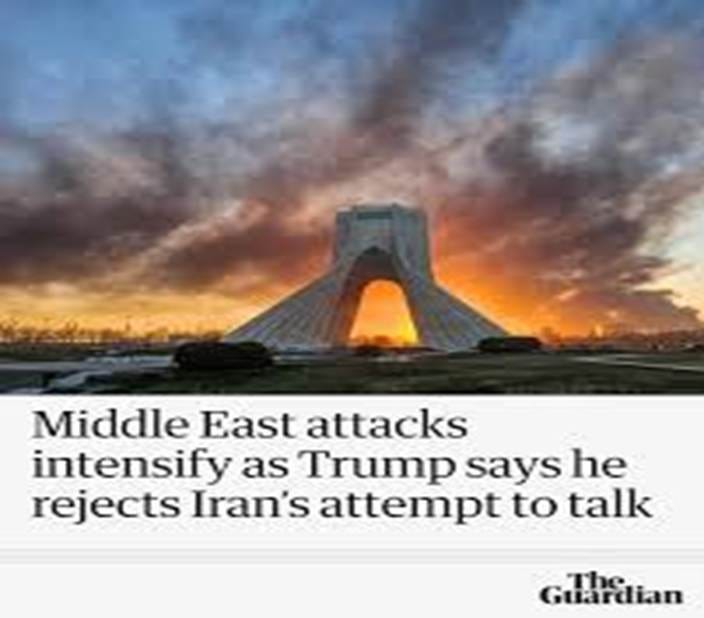
“Deal or No Deal: Quiet While We Bomb You.”
The conflict examined in this essay emerges from the intersection of historical narrative, political decisions, territorial expansion, and military strategy. These forces have reinforced one another, producing a geopolitical situation in which the conflict’s origins remain embedded in its present dynamics.
Ancient history supplied the language through which the Zionist project framed its legitimacy. The establishment of Israel did not arise from the restoration of an ancient polity. It emerged from political decisions of the twentieth century, shaped by imperial diplomacy and international endorsement, decisions that created a new state while leaving questions of sovereignty unresolved.
The decades that followed deepened these contradictions. The occupation of territories captured in 1967 and the continued expansion of settlements reshaped the geography of the conflict and reinforced the perception that territorial consolidation had replaced negotiated compromise.
At the regional level, Israel has pursued a strategy aimed at ensuring that no neighbouring power can achieve military parity. Pre-emptive strikes against nuclear facilities in Iraq and Syria, the maintenance of an undeclared nuclear deterrent, and confrontation with Iran reflect the same strategic principle: preserving decisive military superiority in the region.
Viewed together, these developments reveal a conflict that extends far beyond its original territorial dispute. What began as a nationalist project rooted in historical narrative has evolved into a wider struggle over territory and regional dominance. In recent years, Israeli leaders, including Benjamin Netanyahu, have increasingly described the land between the Jordan River and the Mediterranean Sea as an indivisible historical inheritance, invoking a claim that the territory was divinely granted in antiquity. Such assertions rest on events three thousand years old.
If sovereignty could be justified on that basis, the political map of the world would dissolve into an endless array of competing claims for restoration.
The present Israel–Iran war rests on a falsely constructed historical narrative. It is sustained not by legitimacy but by propaganda and deception.
Don’t stay silent.
If this analysis matters, share it. If independent work matters, support it.
Silence is how unaccountable power becomes normal.
Refuse the comfort of indifference.
Subscribe for unfiltered analysis. Restack to widen its reach.