

Part 3 After the Killing
The System That Makes Atrocity Permanent

This essay is part of my broader work on empire, democracy, war, law, nationalism, and power. These themes are explored in my books, focusing on how power masquerades as freedom but results in exclusion, violence, inequality, and control.
Related books Available in paperback and ebook:
The Colonial Century: Israel, Palestine, and the Modern Architecture of Settler Power
https://books2read.com/u/4XGyMN
The Doomsday Clock is Ticking: Modern War Made Invisible, Profitable, and Permanent
https://books2read.com/u/b65vy0
Liberty and Power: The Promise and Paradox of American Power
https://books2read.com/u/31zKka
Palestine 78 Years of Dispossession, a Century of Violent Displacement. https://books2read.com/u/m0j7W7
Part Three of Three: A Documentary Record of Violence Against Palestinians
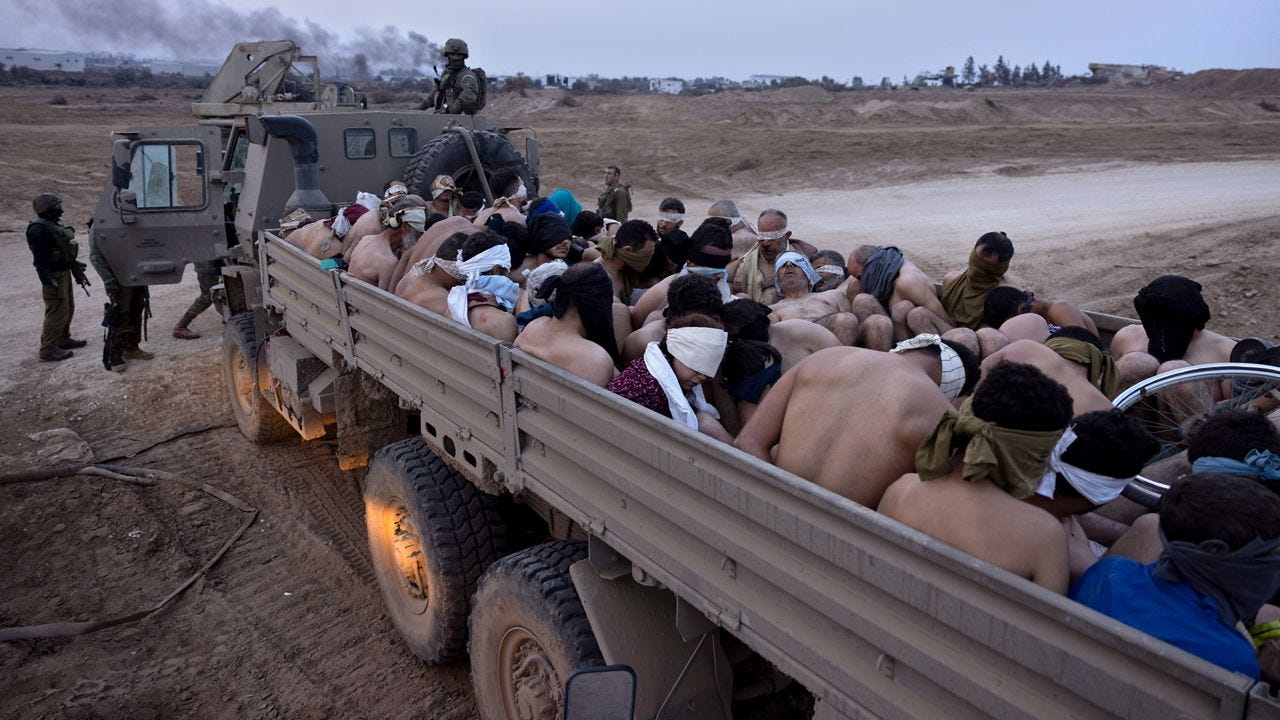
“Israeli War Crimes”
Editorial Note
This three-part series does not manufacture a counter-argument to a historical record. It brings together selected massacres, mass killings, detention abuses, starvation, attacks on medical care, and other documented or alleged atrocities committed against Palestinians from 1948 to the present.
United Nations bodies, human rights organisations, historians, medical workers, witnesses, investigative journalists, and major news agencies have reported these incidents over several decades. Each entry has been checked against published sources. Where responsibility, casualty figures, legal characterisations, or the circumstances surrounding an incident remain disputed, the text identifies that uncertainty and includes the relevant denial or competing account.
This is a chronology of evidence, not a debate in which every atrocity requires an opposing justification. The existence of a dispute does not automatically neutralise evidence, just as an official denial does not erase witness testimony, medical findings, video footage, forensic investigation, or documented patterns of conduct.
Part I proceeds chronologically, establishing continuity across decades. Part II and Part III organise recurring forms of abuse thematically, making patterns that might otherwise disappear within a chronology visible.
Author’s Note
The record of massacres, dispossession, torture, sexual violence, collective punishment, starvation, and attacks on civilian survival examined here concerns the actions of the Israeli state, its armed forces, its security institutions, its prison authorities, extremist settlers, allied militias, and the governments that have authorised, enabled, excused, or failed to prevent these acts.
It does not justify hostility towards Jewish people, nor should it be read as suggesting that all Jews are Zionists or support what has been done to Palestinians. Jewish peoplehood is rooted in religion, history, culture, ancestry, memory, persecution, and diaspora; it cannot be reduced to the policies of a modern state.
Jews are a people; Israel is a state.
Antisemitism is real and must be opposed. Criticism of Zionism, occupation, apartheid, military violence, or the actions of the Israeli government is not inherently antisemitic. It is the necessary scrutiny of political power and of crimes committed in the name of a state that claims to speak for Jewish people everywhere, including those who reject its actions.
Part I: Selected Massacres and Mass Killings, 1948–2025
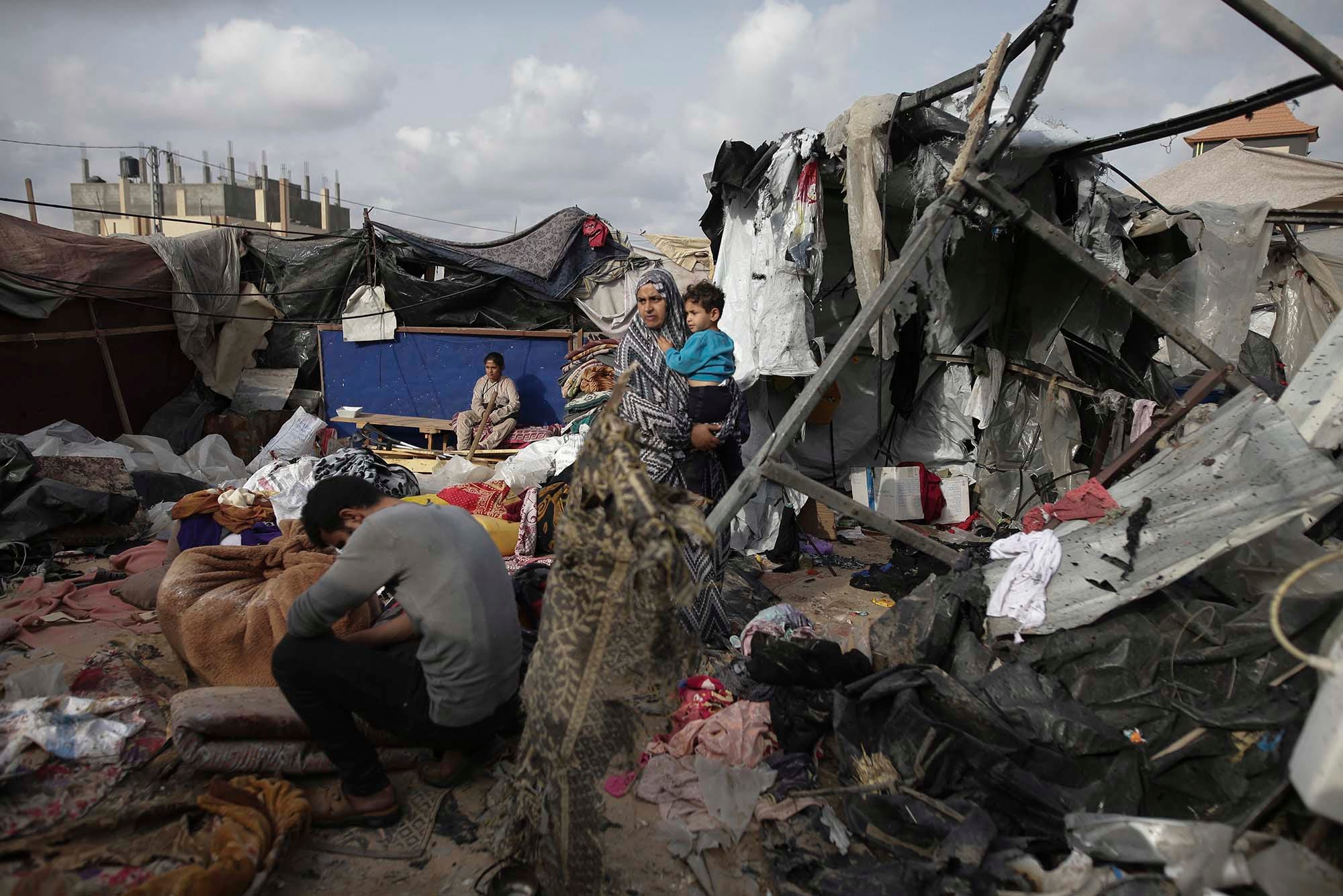
“Is Israel Committing Genocide in Gaza?”
1948: Deir Yassin Massacre
Location: Deir Yassin, near Jerusalem
Responsibility and evidentiary status: Irgun and Lehi Zionist militias carried out the attack.
Approximately 100 Palestinian villagers were killed. Accounts described the killing of men, women, and children, together with the parading and humiliation of surviving prisoners. Deir Yassin became one of the defining massacres of the Nakba and contributed to the fear spreading through Palestinian towns and villages.
News of the massacre helped accelerate mass displacement. Palestinians understood that communities could face attack, expulsion, or destruction as Zionist forces expanded their control of the territory allocated to the proposed Jewish state and moved beyond it.
1948: Tantura Massacre
Location: Tantura, coastal Palestine
Alleged responsibility and evidentiary status: Palestinian survivors and later testimony from Israeli veterans accused soldiers from Israel’s Alexandroni Brigade of killing prisoners and villagers after the community fell. The massacre remains disputed within the Israeli public and historical debate.
Palestinian testimony described the separation of men from women and children, followed by executions and the burial of victims in a mass grave. Later accounts from Israeli veterans added weight to allegations that soldiers killed unarmed Palestinians after organised resistance had ended.
Estimates vary considerably. Some accounts place the number of victims above 200, while other historians dispute both the scale and the characterisation of the event as a massacre. The conflicting claims do not erase the need for independent access to records, burial sites, and surviving testimony.
1948: Lydda Massacre and Death March
Location: Lydda, now Lod
Responsibility and evidentiary status: Israeli forces carried out the killings and the subsequent mass expulsion.
Israeli troops entered Lydda during Operation Dani and killed Palestinian civilians, including people sheltering inside the Dahmash Mosque. Palestinian historical sources estimate that more than 400 people died during the assault and the events surrounding it, although casualty estimates vary.
Israeli forces then expelled tens of thousands of residents from Lydda and nearby Ramle. Families were forced to walk through intense summer heat towards territory held by Arab forces. Many carried children, elderly relatives, and whatever possessions they could take.
People died from thirst, exhaustion, untreated wounds, and exposure during what became known as the Lydda death march. The episode combined mass killing with forced displacement and became one of the central acts of expulsion during the Nakba.
1948: Al-Dawayima Massacre
Location: Al-Dawayima, Hebron district
Responsibility and evidentiary status: Israeli military forces occupied the village and carried out the killings.
Survivor testimony described civilians being executed inside homes, streets, caves, and religious buildings. Accounts included the killing of elderly people, women, and children after Israeli forces entered the village.
The number killed remains uncertain, partly because many residents fled and the village was subsequently depopulated. Estimates range widely, but the massacre is regarded as one of the most serious atrocities committed during the Nakba.
The limited investigation and absence of accountability reflected a broader pattern in which Palestinian villages were destroyed or emptied while the circumstances of their depopulation remained hidden, disputed, or excluded from official Israeli history.
1953: Qibya Massacre
Location: Qibya, West Bank, then under Jordanian control
Responsibility and evidentiary status: Israeli Unit 101, commanded by Ariel Sharon, conducted the operation.
Israeli forces attacked Qibya during the night, placing explosives in homes and demolishing buildings while residents remained inside. Sixty-nine Palestinians were reported killed, most of them women and children.
The operation was presented as retaliation for an earlier attack inside Israel. Its scale, however, extended far beyond an attempt to apprehend particular perpetrators. The destruction of homes and the killing of civilians demonstrated a policy of collective punishment directed at an entire community.
The United Nations Security Council condemned the attack. Israel initially attempted to distance its regular forces from responsibility, but the operation later became firmly associated with Unit 101 and Ariel Sharon.
1956: Kafr Qasim Massacre
Location: Kafr Qasim, inside Israel
Responsibility and evidentiary status: Israeli Border Police carried out the killings while enforcing a newly imposed curfew.
Israeli authorities imposed the curfew with little warning. Palestinian citizens returning from work outside the village had no opportunity to learn of the order before reaching military checkpoints.
Police opened fire on successive groups of residents, killing 49 civilians, including women and children. The victims were not armed combatants; they were workers, farmers, and families returning home.
The subsequent trial established the legal principle that soldiers must refuse a manifestly illegal order. Accountability remained limited, however, and those convicted received reduced sentences or later benefited from pardons and official rehabilitation.
1956: Khan Yunis Massacre
Location: Khan Yunis, Gaza Strip
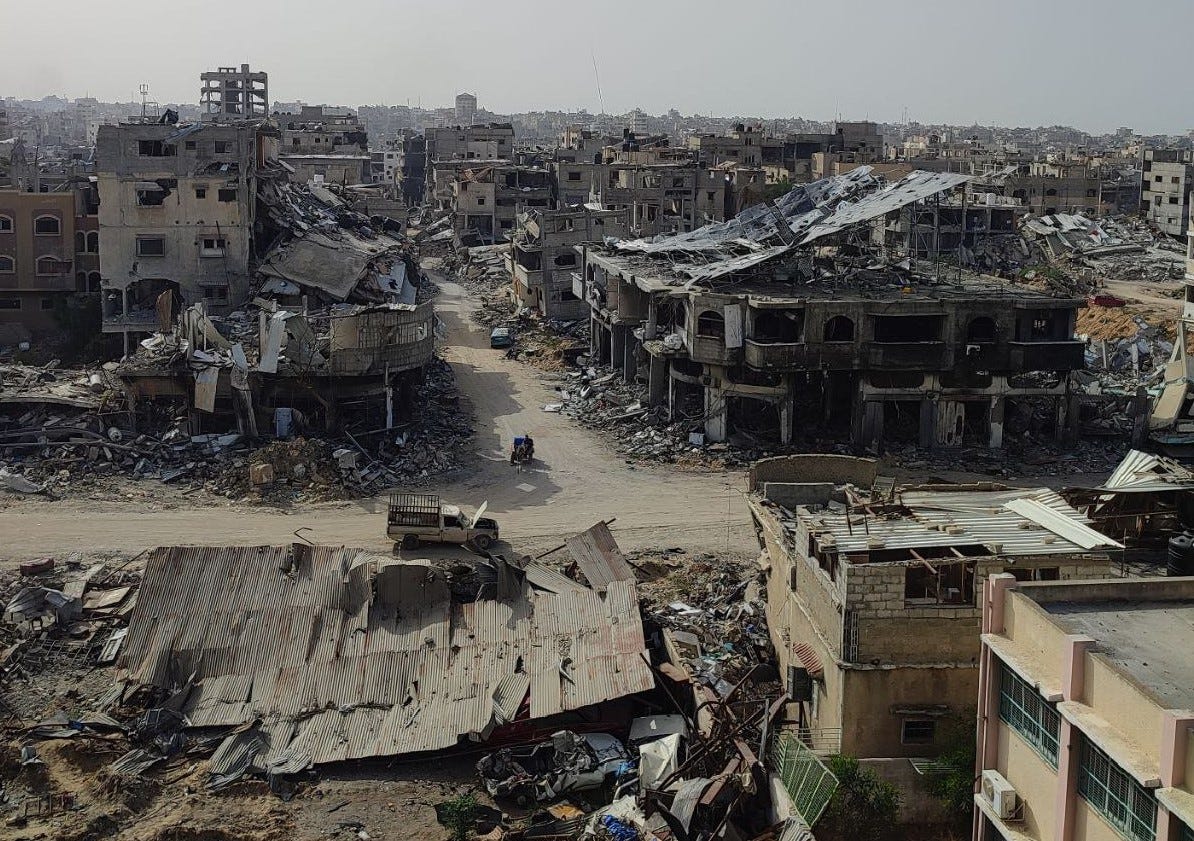
“Khan Yunis Devastated 1956”
Responsibility and evidentiary status: Israeli forces carried out the killings following their occupation of Khan Yunis.
Palestinian civilians and suspected fighters were killed during searches, roundups, house raids, and military operations. Men were reportedly assembled, questioned, and shot, while other residents died during the broader assault on the town and refugee camp.
The United Nations Relief and Works Agency for Palestine Refugees in the Near East reported that 275 people were killed. Palestinian accounts described the incident as a massacre carried out after Israeli forces had established control.
The killings occurred during Israel’s occupation of the Gaza Strip following the Suez Crisis. They became part of a wider record of civilian deaths during Israeli screening and detention operations in Khan Yunis and Rafah.
1956: Rafah Massacre
Location: Rafah refugee camp, Gaza Strip
Responsibility and evidentiary status: Israeli forces conducted the operation during their occupation of the Gaza Strip.
Palestinians were ordered to assemble for screening, identification, and detention. Israeli forces killed civilians during searches, roundups, and confrontations surrounding the operation.
United Nations reporting recorded 111 deaths, while Palestinian sources placed the number higher. The exact circumstances of individual deaths remain contested, but the scale of killing and the coercive nature of the screening operation established Rafah as another major episode of violence during the 1956 occupation.
The Khan Yunis and Rafah killings demonstrated how military occupation could turn administrative processes such as identification, detention, and security screening into occasions for mass violence.
1976: Tel al-Zaatar Massacre
Location: Tel al-Zaatar Palestinian refugee camp, Beirut, Lebanon
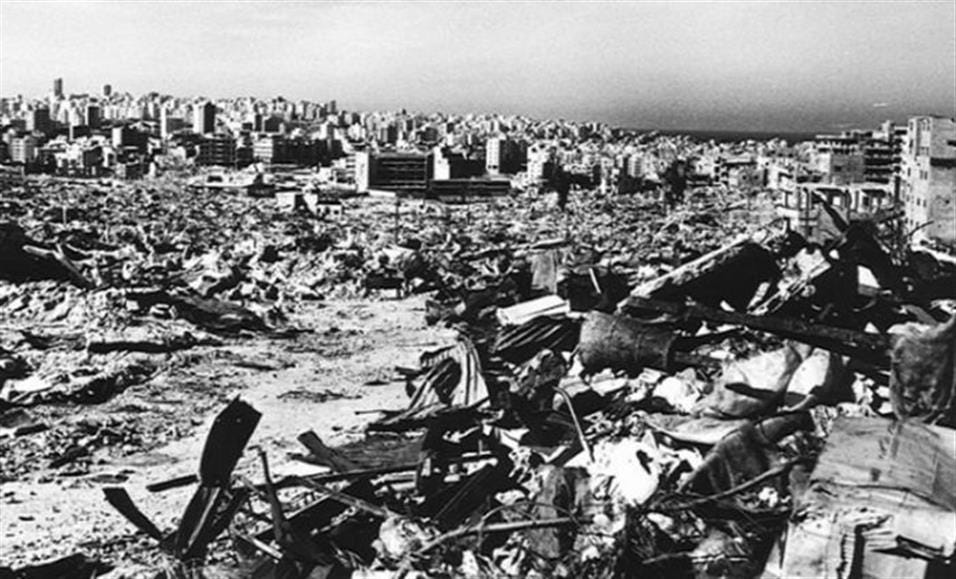
“Tel al-Zaatar refugee camp massacre in Beirut (12 August 1976)”
Direct perpetrators: Lebanese right-wing Christian militias, including the Kataeb or Phalange, the Tigers militia, the Guardians of the Cedars, al-Tanzim, and allied forces.
External responsibility and context: Israel armed, trained, supplied, and politically supported several of the militias involved. Syrian intervention against the Palestine Liberation Organisation and the Lebanese left also helped isolate the camp.
Tel al-Zaatar was besieged for months. Civilians faced severe shortages of food, water, medicine, and medical care while shelling and sniper fire made movement increasingly dangerous.
After the camp fell, armed forces killed civilians during what had been presented as an evacuation. The camp was subsequently destroyed. Estimates range from approximately 1,500 to several thousand deaths.
Although Lebanese militias directly carried out the massacre, external military support and the wider regional struggle over Palestinian armed and political power made the camp vulnerable to prolonged siege and destruction.
1982: Sabra and Shatila Massacre
Location: Sabra neighbourhood and Shatila refugee camp, Beirut, Lebanon
Direct perpetrators: Lebanese Phalangist and Lebanese Forces militias carried out the killings.
Israeli responsibility: Israel had armed and supported the militias, occupied West Beirut, surrounded the camps, controlled the exits, approved the militia’s entry, provided illumination during the night, and failed to stop the killings after reports reached Israeli commanders.
From 16 to 18 September 1982, armed militiamen entered Sabra and Shatila and massacred Palestinian and Lebanese civilians. Victims included women, children, elderly people, and unarmed men.
Estimates range from approximately 1,300 to 3,500 deaths. Bodies were found in homes, streets, alleys, and makeshift burial sites.
Israel’s Kahan Commission found Israel indirectly responsible and held Defence Minister Ariel Sharon personally responsible for failing to prevent foreseeable bloodshed. Sharon resigned as defence minister but remained a major political figure and later became prime minister.
Sabra and Shatila demonstrated how responsibility can extend beyond those who physically carry out a massacre. Military control, prior alliance, access, illumination, intelligence, and the failure to intervene all formed part of the conditions that made the killings possible.
1985–1988: War of the Camps
Location: Palestinian refugee camps across Lebanon
![The Palestinian Museum Digital Archive - أرشيف المتحف الفلسطيني الرقمي : Still Image : A Car Bombing in the Course of the War of the Camps, Beirut, 1985- 1988 [0002.06.2330]](https://substackcdn.com/image/fetch/$s_!0QCw!,f_auto,q_auto:good,fl_progressive:steep/https%3A%2F%2Fsubstack-post-media.s3.amazonaws.com%2Fpublic%2Fimages%2F59fa2355-3c35-4116-8020-ee6db0d877fb_6655x4906.jpeg "The Palestinian Museum Digital Archive - أرشيف المتحف الفلسطيني الرقمي : Still Image : A Car Bombing in the Course of the War of the Camps, Beirut, 1985- 1988 [0002.06.2330]")
“Beirut: War of the Camps”
Direct perpetrators: The Amal militia, Syrian-aligned Palestinian factions, and allied Lebanese forces carried out sieges and attacks.
External responsibility and context: Syria served as the principal military and political sponsor. Israel did not direct the sieges, but its 1982 invasion, the forced evacuation of the Palestine Liberation Organisation, and its continuing occupation of southern Lebanon left Palestinian camps politically and militarily exposed.
Sabra, Shatila, Burj al-Barajneh, Rashidiyya, and other camps faced bombardment, blockade, and restrictions on food and medical supplies. Civilians were trapped inside densely populated areas while armed factions fought for control.
Thousands of Palestinian civilians and fighters were killed, wounded, or displaced. The camps suffered extensive destruction, and the sieges deepened the insecurity of refugees already displaced from Palestine.
The War of the Camps illustrated how earlier invasion and forced political removal could create the conditions for later violence, even when different actors carried out the immediate attacks.
1990: Al-Aqsa Mosque Compound Killings
Location: Al-Haram al-Sharif, occupied East Jerusalem
Responsibility and evidentiary status: Israeli police and Border Police carried out the shootings.
On 8 October 1990, confrontations erupted at the compound amid tensions surrounding efforts by a Jewish extremist organisation to lay a symbolic foundation stone for a proposed temple.
Israeli security forces opened fire, killing at least 17 Palestinians and wounding more than 150. Investigations and witness accounts disputed Israeli claims about the degree of danger faced by police and whether the use of lethal force was necessary.
The United Nations Security Council condemned the violence and called for an investigation. Israel refused to cooperate with a United Nations mission examining the killings.
1994: Ibrahimi Mosque Massacre
Location: Ibrahimi Mosque, Hebron, occupied West Bank
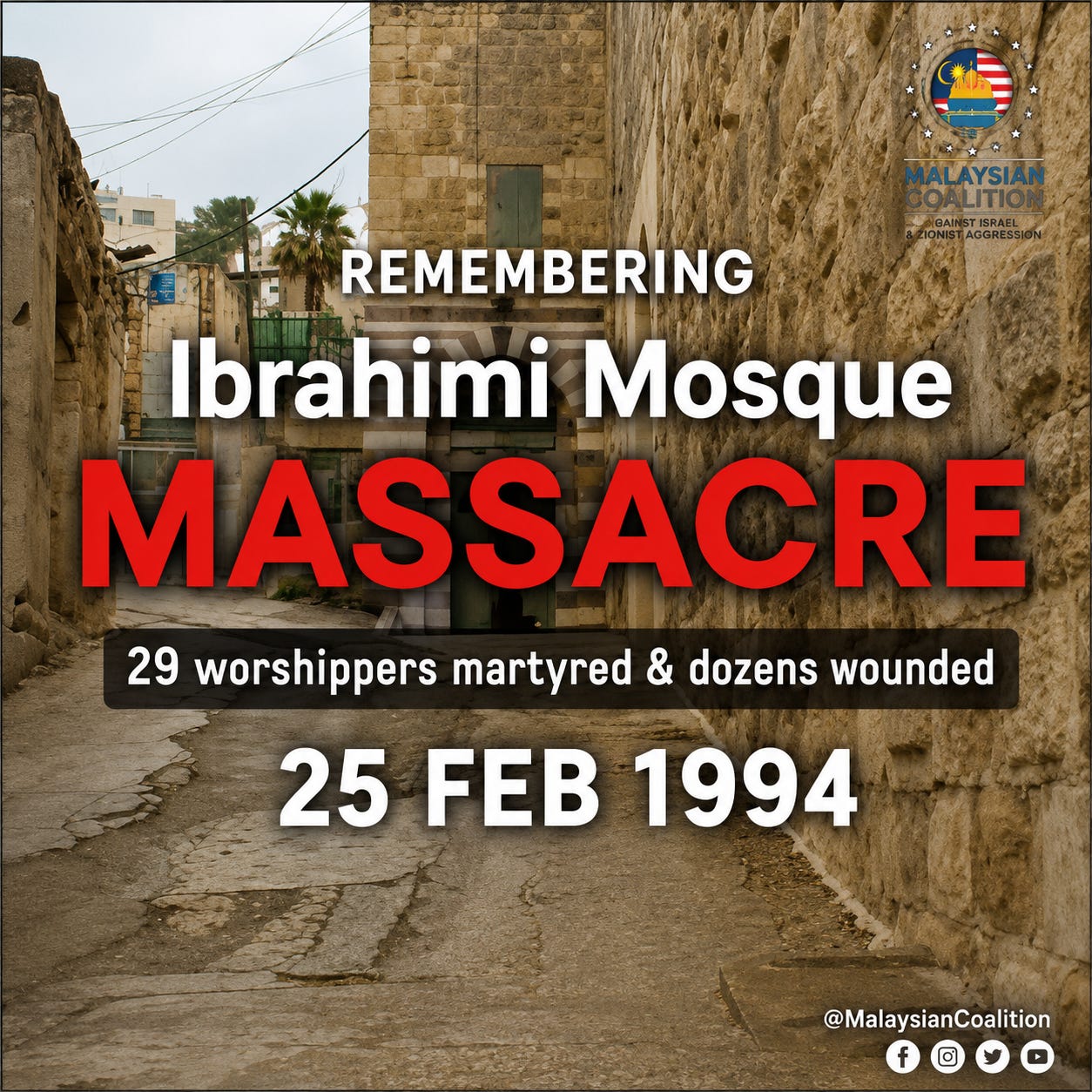
“Remembrance”
Direct perpetrator: Baruch Goldstein, an Israeli settler and member of the extremist Kach movement.
Goldstein entered the mosque during dawn prayers in the Islamic holy month of Ramadan and opened fire on Muslim worshippers. He killed 29 people and wounded approximately 150 before survivors overpowered him.
The massacre occurred within an environment of armed settlement, ideological extremism, and military protection for Israeli settlers living inside occupied Hebron.
Goldstein later became a revered figure among parts of Israel’s far-right settler movement. His grave became a pilgrimage site for extremists, while politicians and activists associated with the Kach tradition continued to influence Israeli public life.
The massacre demonstrated the danger created when violent religious nationalism, armed settlement, and state protection converge in occupied territory.
2002: Jenin Refugee Camp Killings
Location: Jenin refugee camp, occupied West Bank
Responsibility and evidentiary status: Israeli forces conducted the military assault.
Israeli forces entered the camp during Operation Defensive Shield and engaged Palestinian fighters in intense urban combat. Civilians and combatants were killed, homes were demolished, and extensive sections of the camp suffered destruction.
Human rights organisations documented possible war crimes and serious violations, including the use of armoured bulldozers in densely populated areas and restrictions on medical access.
Early claims that Israeli forces had massacred hundreds of people were not substantiated. The incident is therefore more accurately described as the Jenin refugee camp killings or an alleged massacre rather than a confirmed mass killing on the scale initially reported.
The correction of exaggerated early claims does not remove the documented civilian deaths, destruction, obstruction of medical assistance, or the need to examine the conduct of the assault under international humanitarian law.
2008–2009: Operation Cast Lead
Location: Gaza Strip
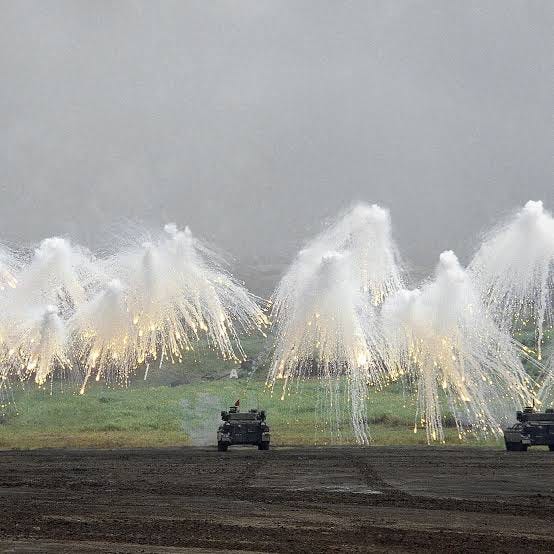
“White Phosphorus: Rain of Fire”
Responsibility and evidentiary status: Israeli military forces conducted the attacks under the authority of the Israeli government.
The 22-day offensive caused extensive civilian deaths and widespread destruction of homes, public buildings, agricultural land, medical facilities, and civilian infrastructure.
Israeli forces fired approximately 200 white phosphorus artillery shells across Gaza, including over densely populated areas. White phosphorus burns on contact with oxygen and can cause deep injuries, fires, and long-term suffering.
Amnesty International and Human Rights Watch found evidence that some Israeli attacks, including the repeated use of white phosphorus in populated areas, constituted or indicated war crimes.
Israel argued that it had acted against Hamas and other armed groups firing rockets into Israeli territory. International investigations nevertheless documented attacks that raised serious questions concerning distinction, proportionality, precautions in attack, and the protection of civilians.
2014: Shuja’iyya Killings
Location: Shuja’iyya, Gaza City
Responsibility and evidentiary status: Israeli forces carried out the bombardment.
Heavy artillery and air attacks struck one of Gaza City’s most densely populated neighbourhoods. Palestinian civilians were killed as families attempted to flee, shelter, or retrieve wounded relatives.
Large sections of the neighbourhood were destroyed. Emergency workers reported difficulty reaching casualties because of continuing shelling.
Palestinian sources widely described the assault as a massacre. The precise civilian and combatant toll remains disputed, but the intensity of fire in a densely populated civilian area raised serious concerns about indiscriminate or disproportionate attack.
2014: Rafah “Black Friday”
Location: Rafah, Gaza Strip
Responsibility and evidentiary status: Israeli forces conducted the operation after an Israeli soldier was believed to have been captured.
From 1 to 4 August, Israeli aircraft, artillery, and ground forces carried out intensive attacks intended to prevent the captured soldier from being removed from the area.
At least 135 Palestinian civilians were killed. Homes, streets, vehicles, and medical facilities came under attack while residents attempted to flee or assist the wounded.
Amnesty International and Forensic Architecture found strong evidence that Israeli forces committed war crimes. Their investigation concluded that the scale and intensity of the fire reflected a disregard for civilian life during an operation driven by the military objective of preventing a soldier’s capture.
2018–2019: Great March of Return Killings
Location: Gaza boundary fence
Responsibility and evidentiary status: Israeli snipers and other Israeli forces fired on Palestinian demonstrators.
Palestinians gathered near the boundary fence to protest the blockade of Gaza and assert the right of refugees to return to homes and land from which their families had been displaced.
Israeli forces killed 183 demonstrators and shot more than 6,100 others. Those killed or wounded included children, journalists, medical workers, and people who appeared to pose no imminent threat.
Israel argued that armed groups used the demonstrations as cover for attempts to breach the fence and attack Israeli territory. A United Nations commission nevertheless found reasonable grounds to believe that some shootings may have constituted war crimes.
The repeated use of live ammunition against demonstrators demonstrated how border enforcement and crowd control could become forms of lethal military violence.
2023: Jabalia Refugee Camp Strikes
Location: Jabalia refugee camp, Gaza Strip
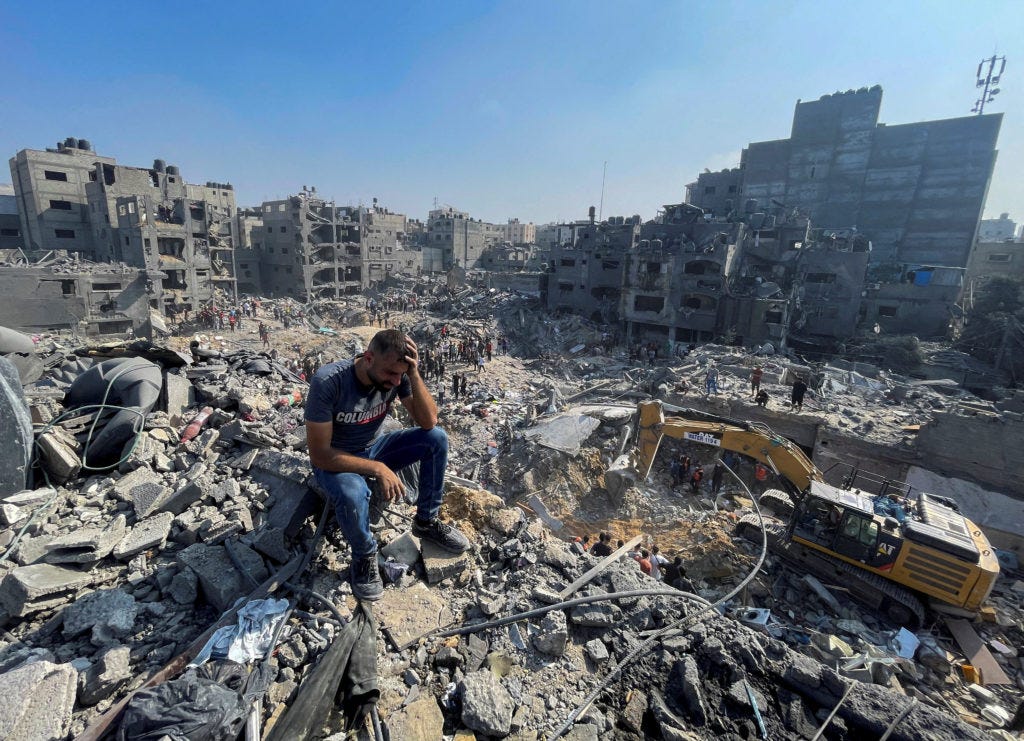
“Israeli airstrikes flatten apartments in Gaza’s Jabaliya refugee camp.”
Responsibility and evidentiary status: The Israeli Air Force carried out the strikes.
Israeli bombs struck one of Gaza’s most densely populated refugee camps. Entire residential buildings collapsed, burying families beneath the rubble.
Israel said it had targeted Hamas commanders and underground military infrastructure. The strikes nevertheless killed large numbers of civilians and caused extensive destruction in an area where residents had few safe places to flee.
Airwars later assessed that the strike on 31 October alone killed at least 126 civilians, including 68 children.
The attack raised fundamental questions about proportionality and the acceptance of foreseeable civilian deaths when using large explosive weapons in densely populated residential areas.
2023: Al-Ahli Hospital Explosion
Location: Gaza City
Responsibility and evidentiary status: Responsibility remains disputed. Palestinian authorities blamed Israel, while Israel attributed the explosion to a failed Palestinian Islamic Jihad rocket.
The explosion struck the hospital grounds, where displaced civilians had gathered because they believed the medical complex offered relative safety.
A large number of people were killed or injured. Initial casualty reports varied significantly, and competing investigations reached different conclusions about the weapon and direction of fire.
Restricted access, the destruction of physical evidence, wartime propaganda, and the absence of a universally accepted independent investigation prevented definitive attribution.
The case remains included because of the scale of civilian harm, while the uncertainty surrounding responsibility must remain explicit.
2024: Al-Rashid Street Aid-Convoy Killings, Known as the Flour Massacre
Location: Al-Rashid Street, Gaza City
Alleged responsibility and evidentiary status: Palestinian witnesses and officials accused Israeli forces of firing on civilians. Israel acknowledged that troops opened fire but argued that many people died in a crowd crush or after being struck by aid vehicles.
More than 100 Palestinians were killed while gathering around an aid convoy carrying flour and other supplies.
Survivors, doctors, and medical workers reported treating extensive gunshot injuries. Video footage and witness accounts showed a chaotic scene involving desperate civilians, military fire, trucks, and large crowds.
The incident demonstrated the extreme danger created when a starving population must gather under military observation to obtain basic food. It also showed how disputes over the immediate cause of death can obscure the wider conditions that placed civilians in mortal danger.
2024: Rafah Tent-Camp Massacre
Location: Rafah, Gaza Strip
Responsibility and evidentiary status: Israeli forces carried out the strike.
An Israeli attack struck a camp sheltering displaced Palestinians and ignited a fire that spread through tents and temporary structures.
Forty-five people were killed, including women and children. Images of burned bodies and families searching for relatives provoked widespread international condemnation.
Israel said the strike had targeted Hamas figures and described the civilian deaths as a tragic mistake. The attack nevertheless occurred in an area containing displaced civilians whose presence was known.
The killings illustrated the danger of conducting air attacks near makeshift camps where tents, fuel, overcrowding, and the absence of emergency services magnify the consequences of an explosion.
2024: Nuseirat Rescue Operation
Location: Nuseirat refugee camp, Gaza Strip
Responsibility and evidentiary status: Israeli military forces carried out the operation to rescue four hostages.
Israeli forces conducted a heavily armed assault in a densely populated civilian area. Air strikes and ground fire accompanied the rescue operation as Israeli forces withdrew with the hostages.
Palestinian authorities reported that hundreds of Palestinians were killed, while Israel disputed the casualty figures and argued that armed militants had fought from within the civilian area.
The scale of civilian deaths led Palestinians and many observers to describe the operation as the Nuseirat massacre.
The rescue of hostages represented a legitimate objective, but international humanitarian law did not remove the obligation to distinguish between combatants and civilians or to avoid excessive civilian harm in relation to the anticipated military advantage.
2024: Al-Taba’een school strike
Location: Gaza City
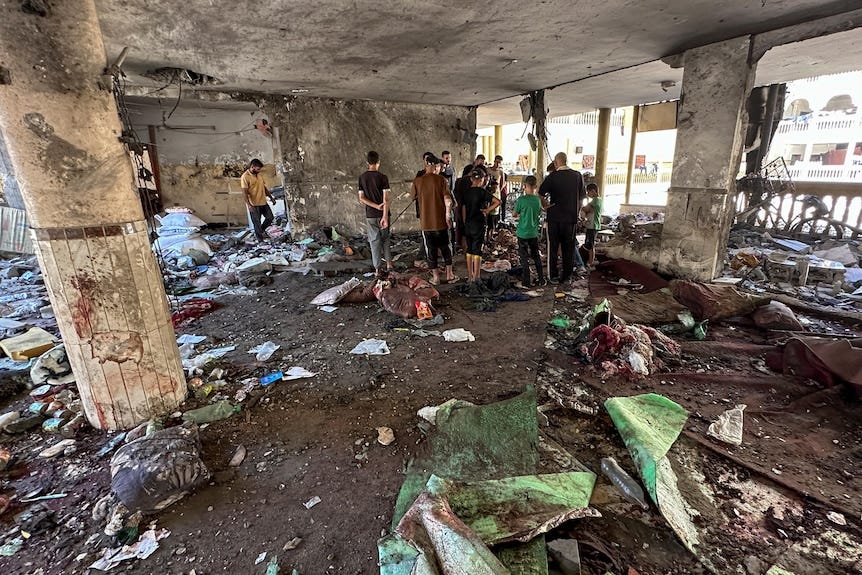
“Israel’s strike on Al-Taba’een school.”
Responsibility and evidentiary status: The Israeli Air Force carried out the strike.
The attack hit a school sheltering displaced Palestinians during dawn prayers. Palestinian authorities reported that between 80 and 100 people were killed.
Israel said it had targeted militants operating from the school and disputed the casualty figures. Palestinian officials, witnesses, and medical workers described extensive civilian deaths.
The incident formed part of a wider pattern of attacks on schools being used as shelters after repeated displacement had left civilians with few alternatives.
Even where armed groups operate unlawfully from civilian locations, attacking forces remain bound by the principles of distinction, proportionality, and precautions in attack.
2025: Aid-Distribution Site Killings
Location: Aid-distribution sites and convoy routes across Gaza
Alleged responsibility and evidentiary status: Israeli forces were accused in many incidents, while armed groups, security contractors, and chaotic crowd conditions were implicated in others. Responsibility for individual shootings remains disputed and must be assessed separately.
United Nations officials documented repeated killings of Palestinians seeking food near aid-distribution centres and convoy routes.
By July 2025, Reuters reported that at least 798 people had been killed near aid sites. The incidents are examined in greater detail in Part III under “Aid-Seeker Killings.”
The chronological record establishes continuity across decades. The following sections organise recurring forms of abuse thematically, revealing how violence continued after arrest, inside detention, against children and rescuers, and through the destruction of the conditions required for civilian survival.
Part II: Detention, Torture and Sexual Violence
Physical Torture of Detainees
Location: Israeli prisons, military bases, interrogation centres, and detention facilities
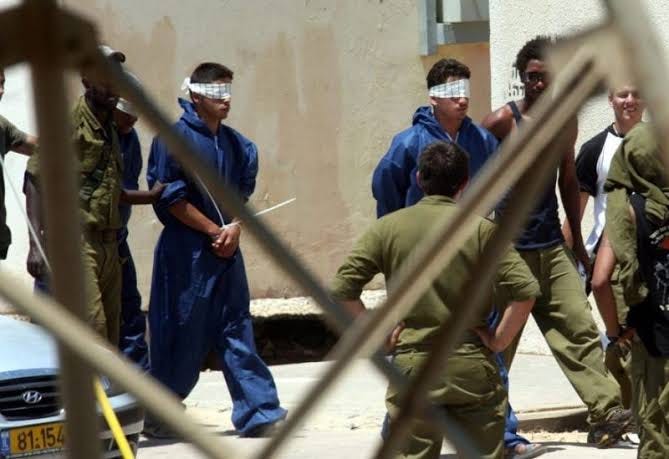
“Israeli prisons and detention camps are designed to torture Palestinian detainees”
Responsibility and evidentiary status: Palestinian detainees have accused Israeli military, police, prison, and intelligence personnel of torture and cruel, inhuman, or degrading treatment.
Human Rights Watch reported that Palestinian healthcare workers detained from Gaza described beatings, stripping, prolonged cuffing, blindfolding, painful stress positions, electric shocks, suspension from chains, denial of medical care, and severe detention conditions.
Other detainees described being kicked, punched, struck with weapons, forced to remain in painful positions, deprived of sleep, denied access to toilets, and left restrained for extended periods.
Medical workers reported injuries consistent with prolonged shackling, blunt-force trauma, untreated wounds, and severe physical mistreatment.
The fact that detainees were held under complete institutional control intensifies the detaining authority’s responsibility. Prisoners cannot protect themselves, seek independent medical treatment, preserve evidence, or freely report abuse while remaining in custody.
These accounts require independent investigation. Where physical evidence, medical findings, witness testimony, or institutional records support the allegations, those responsible must face criminal prosecution.
Institutionalised Psychological Abuse of Detainees
Location: Israeli prisons, interrogation centres, military bases, and detention facilities
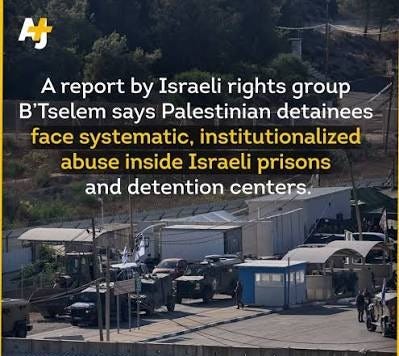
“Torture”
Responsibility and evidentiary status: Detainees have attributed these practices to Israeli interrogators, guards, soldiers, and security personnel.
Reported abuses include threats of indefinite detention, rape, execution, or harm to family members; prolonged blindfolding and isolation; sleep deprivation; forced nudity; verbal abuse; religious humiliation; exposure to the screams of other prisoners; and the use of dogs to terrify detainees.
Some detainees reported being told that relatives had been killed, arrested, or sexually assaulted. Others described interrogators threatening to destroy their homes or punish family members unless they cooperated.
Psychological torture does not require visible physical injury. Sustained fear, humiliation, uncertainty, sensory deprivation, threats against loved ones, and the deliberate destruction of personal dignity can cause profound and lasting harm.
When officials use such methods to punish, intimidate, extract information, compel confession, or break resistance, the conduct may constitute psychological torture or cruel, inhuman, and degrading treatment.
The repetition of similar allegations across different facilities and among detainees who did not know one another raises concerns that these practices extend beyond isolated misconduct.
Humiliation and Public Degradation of Prisoners
Location: Israeli military custody, prisons, military bases, and temporary detention sites
Responsibility and evidentiary status: Israeli personnel have been accused of photographing, filming, and publicly humiliating bound, blindfolded, naked, or partially stripped Palestinian detainees.
Images and videos circulated by Israeli soldiers and social-media users have shown detainees kneeling, blindfolded, handcuffed, stripped to their underwear, or arranged for photographs while under armed guard.
A 2026 Reuters report described a deleted social-media image showing a Palestinian detainee stripped to their underwear, blindfolded, bound, and tied to a cot. The Israeli military confirmed that the image was authentic and said it had opened an inquiry.
Other footage has shown groups of detainees forced to sit or kneel in exposed positions while soldiers photographed or mocked them.
The public circulation of such images converts captivity into spectacle. It strips prisoners of privacy, dignity, and control over their own bodies while exposing them to permanent digital humiliation.
Forced nudity can also carry a sexualised and psychological dimension, particularly where guards use it to intimidate, degrade, or demonstrate complete power over detainees.
Such treatment may violate the prohibition against outrages upon personal dignity, humiliating and degrading treatment, and the public exposure of protected persons.
Rape and Sexual Torture of Detainees
Location: Israeli prisons, military bases, interrogation centres, and detention facilities
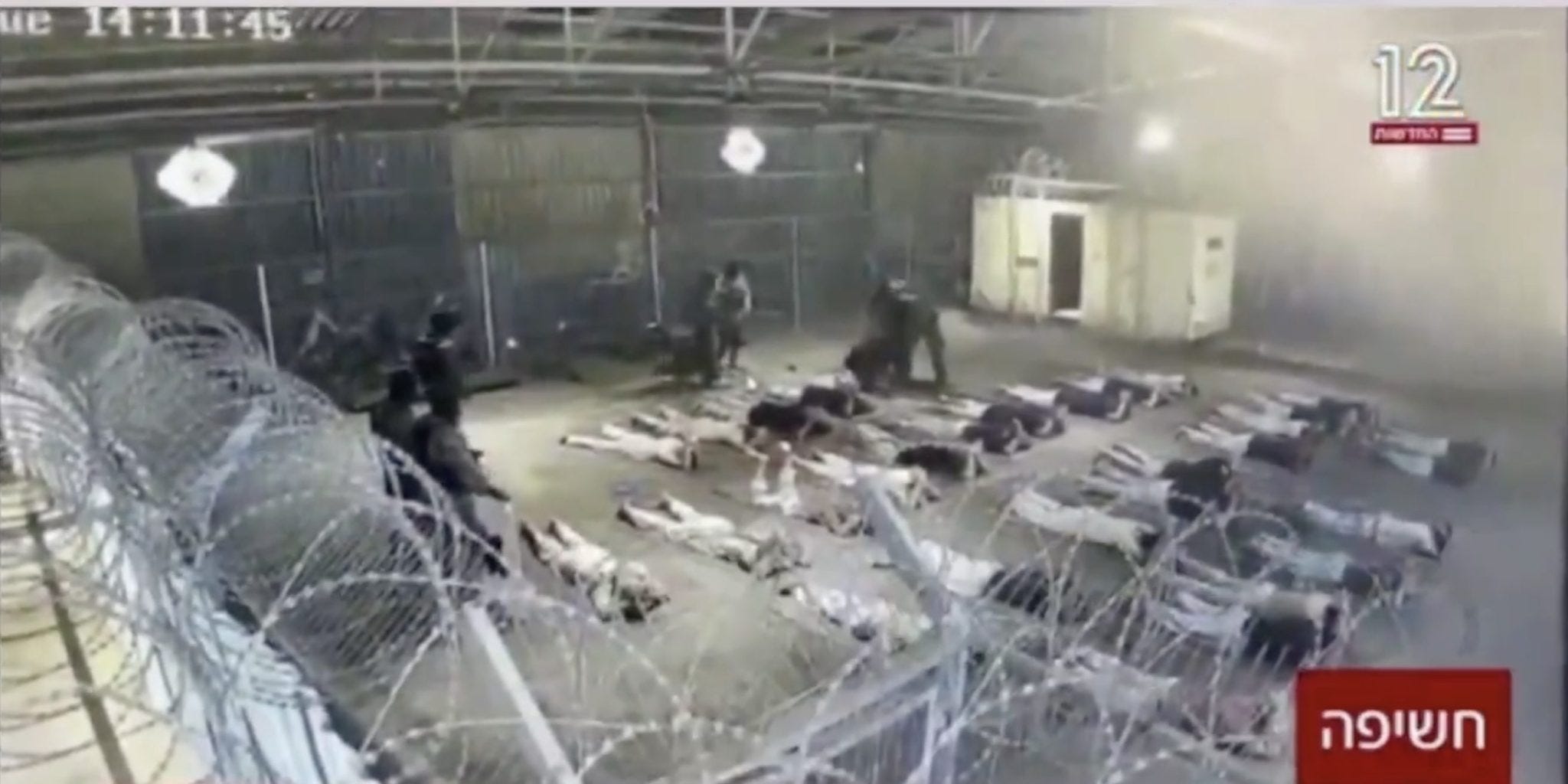
“Video of Sexual Abuse at Israeli Prison Is Just Latest Evidence Sde Teiman Is a Torture Site”
Responsibility and evidentiary status: Palestinian detainees have accused Israeli soldiers, prison guards, interrogators, and security personnel of rape, penetrative sexual assault, forced nudity, sexual humiliation, threats of rape, and violence directed at their genitals.
These accusations are not based solely on detainee testimony.
In July 2024, surveillance footage from the Sde Teiman military detention facility recorded Israeli soldiers taking a blindfolded and shackled Palestinian detainee aside before surrounding him with riot shields that appeared intended to obstruct the cameras.
The footage appeared to show the soldiers sexually assaulting him. Although the shields concealed parts of the assault, the video documented the surrounding conduct and the detainee’s complete physical helplessness.
The detainee was later hospitalised with broken ribs, lung damage, and a severe rectal injury requiring surgery. The footage, medical evidence, and nature of the injuries provided direct evidence consistent with violent penetrative sexual assault.
Five Israeli reservists were subsequently charged with aggravated abuse. In March 2026, however, the Israeli military dropped the charges, citing evidentiary difficulties, procedural problems surrounding the leaking of the footage, and uncertainty over whether the Palestinian victim, who had been released into Gaza, could testify.
Dropping the charges did not establish that the assault had not occurred. It meant that the Israeli military prosecution decided not to proceed.
The case also revealed a disturbing political response. Far-right protestors, politicians, and supporters of the accused entered or demonstrated outside military facilities, while public debate often focused more intensely on the leaking of the footage than on the treatment of the detainee.
Physicians for Human Rights Israel, Human Rights Watch, the United Nations Human Rights Office, B’Tselem, and other organisations have documented a broader pattern of forced nudity, sexual humiliation, threats of rape, assaults on detainees’ genitals, and alleged rape using objects or weapons.
Taken together, the surveillance footage, medical findings, detainee testimony, and repeated reports from independent organisations indicate that sexual violence was not confined to a single unverified accusation.
They demand an independent international criminal investigation and accountability. A detention system cannot credibly investigate itself when the institutions implicated in the abuse also control the evidence, the witnesses, the detention sites, and the decision to prosecute.
Part III: Children, Civilians and the Destruction of Survival
Systematic Harm to Palestinian Children
Location: Gaza Strip and occupied Palestinian territory
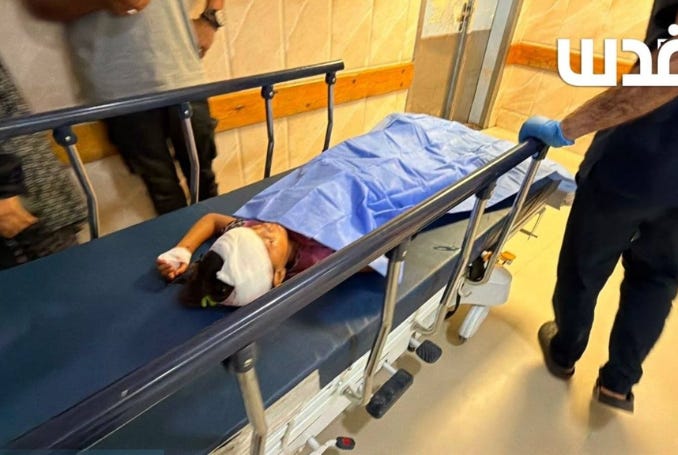
“A young girl was wounded after being shot by Israeli occupation forces in the Al-Mawasi area of Khan Yunis in July 2026.”
Responsibility and evidentiary status: A 2026 United Nations commission accused Israel of deliberately and systematically inflicting severe harm on Palestinian children. Israel rejected the report as politically motivated and based on unreliable evidence.
The commission examined killing, injury, starvation, displacement, detention, psychological trauma, and attacks on schools, hospitals, maternity facilities, and essential infrastructure.
Children were not harmed only through direct military attack. They also suffered through the destruction of homes, separation from parents, repeated displacement, hunger, dehydration, untreated illness, loss of education, and the collapse of medical care.
Many children witnessed the deaths of parents, siblings, relatives, and friends. Others underwent amputations or painful medical treatment without sufficient anaesthetic, antibiotics, rehabilitation, or psychological support.
Taken together, these forms of harm damaged the physical, emotional, educational, familial, and social conditions necessary for childhood to survive.
The scale of injury also affects future generations. Malnutrition, trauma, interrupted development, disability, orphanhood, and the destruction of schools and communities will continue long after the immediate attacks end.
Hind Rajab, Her Family and the Paramedics Who Were Killed
Location: Gaza City, January 2024
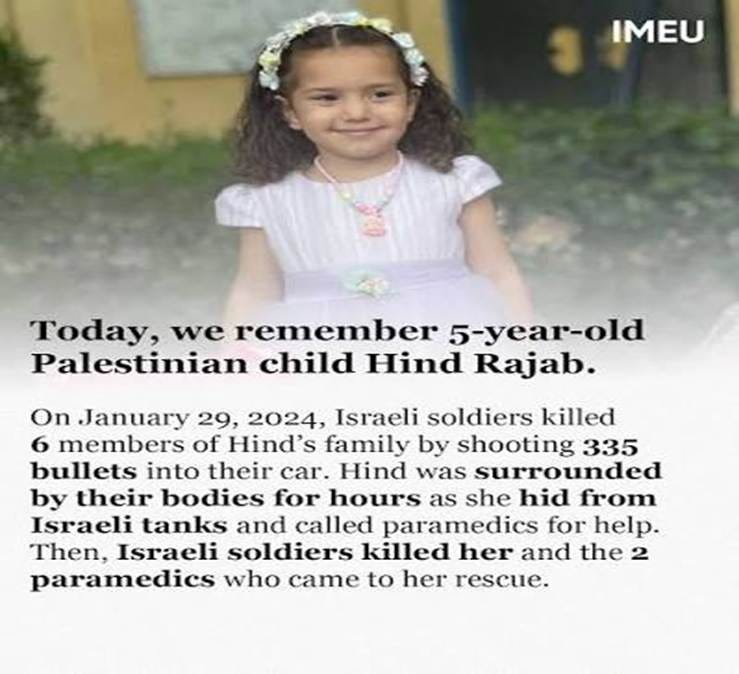
“What Israel’s ‘most moral army in the world’ is doing in Gaza.”
Alleged responsibility and evidentiary status: Evidence examined by journalists, investigators, and a United Nations commission challenged the Israeli military’s claim that its forces were not near the scene.
Six-year-old Hind Rajab became trapped inside a car after members of her family were killed. During telephone calls with emergency workers, she pleaded for help while surrounded by the bodies of her relatives.
The Palestine Red Crescent Society dispatched two paramedics after attempting to coordinate safe access. Contact with Hind and the ambulance was then lost.
Hind’s body and those of her relatives were later found inside the bullet-damaged vehicle. The bodies of the two paramedics were found inside their destroyed ambulance nearby.
Investigations examined satellite imagery, vehicle positions, military movements, telephone records, and the damage to the car and ambulance. The evidence raised serious questions about Israeli denials that its forces had been present.
Hind’s final calls made the case one of the defining examples of the killing of children and rescuers during the Gaza war. Her death also exposed the danger faced by emergency workers attempting to reach civilians trapped in areas under military control.
Nahed and Ramez Barbakh: White-Flag Killings
Location: Khan Younis, Gaza Strip
Alleged responsibility and evidentiary status: Video footage and witness accounts attributed the shootings to Israeli forces. A United Nations commission later examined the incident.
Fifteen-year-old Nahed Barbakh was shot while carrying a white flag during an attempted evacuation. The white flag visibly signalled surrender, civilian status, or an intention not to fight.
His brother Ramez, aged 20, then approached to help him and was also shot.
Investigators reported that Nahed was struck repeatedly, including by shots that may have been intended to ensure that he was dead.
The laws of war protect civilians and those hors de combat, “outside the fight”. Shooting a person who clearly signals surrender or poses no apparent threat may constitute an unlawful killing.
The deaths of the two brothers raised broader concerns that civilians attempting to evacuate or display their non-combatant status could not rely upon those signals for protection.
Ramzi Abu Sahloul: Filmed White-Flag Killing
Location: West of Khan Younis, Gaza Strip
Alleged responsibility and evidentiary status: Video footage raised concerns that Israeli forces shot an unarmed civilian who posed no visible threat. The Israeli military said it would review the incident.
Ramzi Abu Sahloul was walking with a group of Palestinians carrying a white flag when he was shot and killed.
The footage showed civilians moving openly and displaying a recognised signal of non-hostility. The visible circumstances did not appear to show an immediate threat to the forces observing them.
The filmed shooting intensified concerns that civilians attempting to surrender, evacuate, negotiate safe passage, or signal their non-combatant status were not being protected.
Internal military review cannot substitute for independent investigation when the available evidence raises the possibility of an intentional or reckless killing.
Civilians Fired Upon While Fleeing or Sheltering
Location: Multiple locations across Gaza
Responsibility and evidentiary status: United Nations experts, journalists, medical workers, and human rights organisations documented reports that Israeli forces fired on civilians seeking shelter, evacuating, or signalling surrender. Israel has denied deliberately targeting civilians.
Reported victims included women, children, elderly people, and families carrying white cloths or following evacuation instructions.
Some civilians were reportedly shot while leaving areas that Israeli authorities had ordered them to evacuate. Others came under fire while attempting to reach designated routes, retrieve relatives, or move towards locations presented as safer.
The issuing of an evacuation order does not remove the attacking force’s responsibility to protect civilians. A warning also loses meaning when civilians face attack on evacuation routes, at destination sites, or while attempting to comply.
Each incident requires a separate investigation. The recurrence of similar accounts, however, raises serious concerns about civilian protection, military rules of engagement, and compliance with international humanitarian law.
A Ten-Day-Old Baby Shot While Being Breastfed
Location: A displacement tent in Gaza
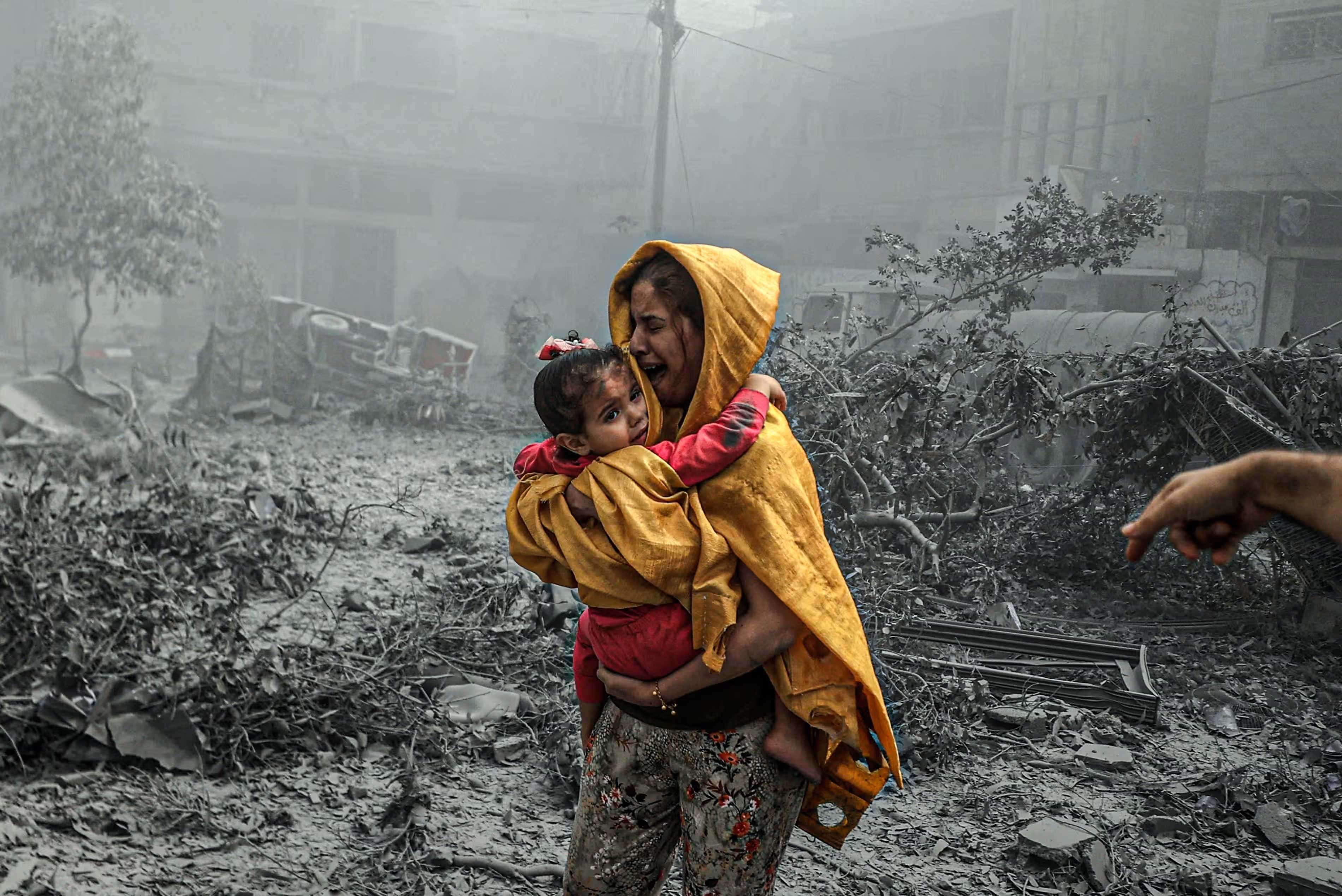
“Israel kills a Palestinian woman every hour in the Gaza Strip, including 7,920 mothers.”
Alleged responsibility and evidentiary status: A 2026 United Nations commission examined evidence that Israeli gunfire wounded the baby. Israel rejected the commission’s report as biased and methodologically flawed.
The infant was reportedly shot while being breastfed inside a tent used by displaced civilians.
The circumstances described an attack reaching a newborn child inside a space that should have offered basic civilian shelter. The baby could not have posed any conceivable threat.
The case formed part of the commission’s wider findings concerning the killing and wounding of Palestinian children.
It also illustrated how displacement did not deliver safety. Families ordered or forced from their homes remained exposed in tents, schools, camps, and improvised shelters with little protection from gunfire or bombardment.
Children Shot in the Head or Chest
Location: Hospitals and medical facilities across Gaza
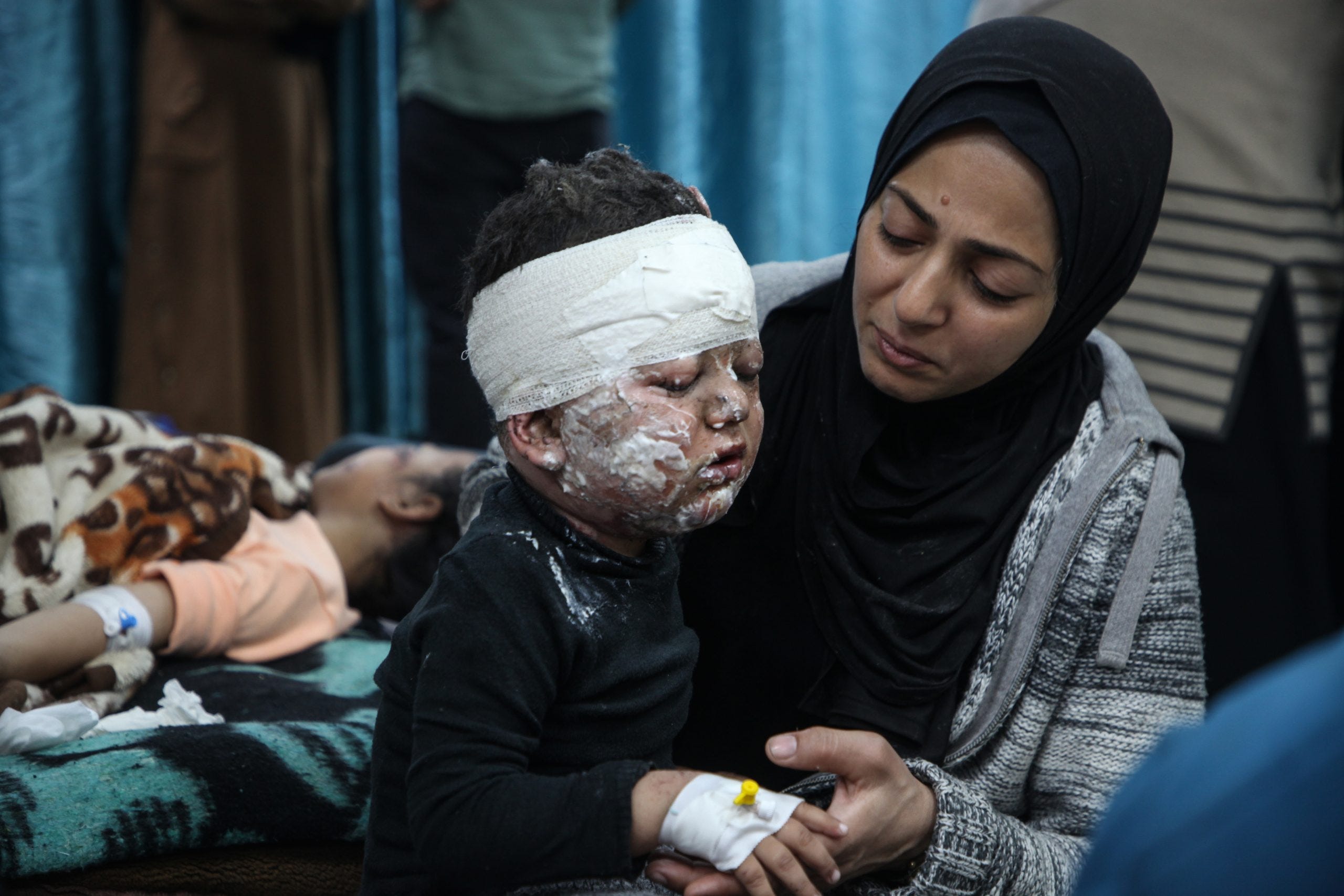
“Let the little children come to me, and do not hinder them, for the kingdom of heaven belongs to such as these.”
Responsibility and evidentiary status: International doctors reported treating children with precise gunshot wounds that raised concerns about deliberate or reckless targeting. The Israeli military denied that its snipers intentionally shot children.
Medical workers told The Guardian that they treated children, some as young as seven or eight, with single gunshot wounds to the head or chest.
Doctors who worked at different hospitals and during different periods described injuries that appeared disturbingly similar. Some said the wounds were difficult to explain as random crossfire or fragment injuries.
A gunshot wound to the head or chest does not by itself establish the shooter’s intent. The repeated nature, location, and apparent precision of the injuries, however, led doctors and human rights investigators to call for an independent examination of Israeli rules of engagement and individual shootings.
The testimony of medical professionals who directly treated the children forms an evidentiary record that cannot be dismissed through general denial alone.
Three-Year-Old Emad Abu al-Qura
Location: Gaza Strip
Alleged responsibility and evidentiary status: Emad’s family accused an Israeli sniper of firing on the child and his cousin. The allegation requires an independent investigation.
Three-year-old Emad Abu al-Qura was reportedly shot outside his home while walking with his cousin to buy fruit.
His age and the ordinary circumstances of the shooting made the case another stark example of the dangers faced by Palestinian children outside recognised combat situations.
A child of three cannot reasonably be mistaken for an armed combatant. Establishing responsibility requires access to military positions, firing records, witness testimony, medical findings, and the location of the shooting.
The absence of an immediate independent investigation allows evidence to disappear and official denial to harden into the final public account.
Starvation and Deprivation
Location: Gaza Strip
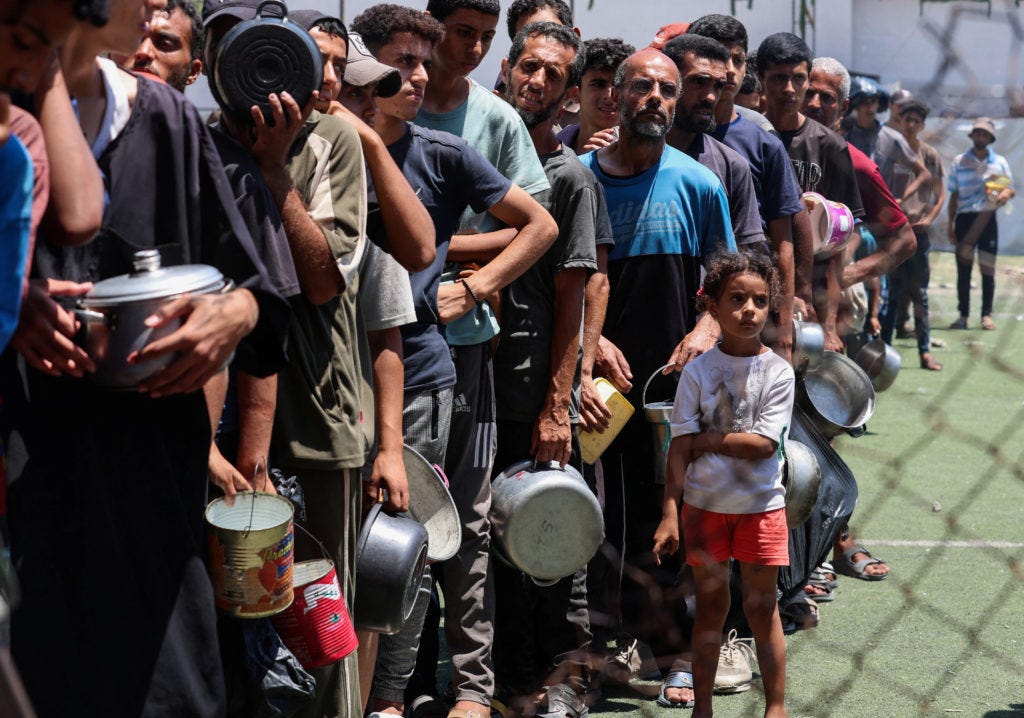
“Israeli tanks and snipers opened fire on a crowd seeking aid in Gaza”
Responsibility and evidentiary status: United Nations agencies, humanitarian organisations, medical workers, and human rights investigators accused Israel of obstructing the delivery of food, water, fuel, medicine, and other humanitarian assistance. Israel disputed accusations that it deliberately imposed deprivation on civilians.
Restrictions on aid, the destruction of agricultural land, attacks on food production, damage to water and sanitation systems, and the collapse of medical services exposed civilians to hunger, disease, and preventable death.
Families survived on reduced portions, animal feed, wild plants, or whatever food remained available. Parents skipped meals so children could eat. Infants and pregnant women faced particular danger as milk, nutritional supplements, clean water, and medical care disappeared.
Starvation does not consist only of death from an empty stomach. It weakens immunity, worsens wounds, increases vulnerability to infection, impairs childhood development, endangers pregnancy, and turns otherwise treatable illnesses into fatal conditions.
The use of starvation against civilians is prohibited under international humanitarian law. When imposed intentionally as a method of warfare, it may constitute a war crime.
The destruction or obstruction of the systems required to obtain food can be as consequential as preventing food trucks from entering. Agricultural land, bakeries, fishing access, water networks, fuel supplies, transport routes, markets, and humanitarian organisations all contribute to civilian survival.
Aid-Seeker Killings
Location: Aid convoys, distribution sites, and access routes across Gaza
Alleged responsibility and evidentiary status: Israeli forces were accused in many incidents, while armed groups, security contractors, and chaotic crowd conditions were implicated in others. Responsibility for individual killings remains contested and must be assessed separately.
Palestinians seeking flour, food parcels, and other survival supplies were repeatedly killed or wounded near convoys and distribution centres.
These incidents included the February 2024 Flour Massacre and later shootings near sites associated with the Gaza Humanitarian Foundation.
United Nations human rights officials reported hundreds of deaths. Reuters recorded at least 798 Palestinians killed near aid sites by July 2025.
Witnesses described crowds approaching trucks or distribution points before gunfire erupted. Medical facilities repeatedly received people suffering from gunshot wounds after attempting to obtain food.
Israel disputed many accounts, arguing in some cases that troops fired warning shots, responded to perceived threats, or did not cause the majority of deaths.
The wider context cannot be separated from individual incidents. Extreme deprivation forced large crowds of hungry civilians to gather at limited and heavily controlled distribution points. The aid system itself placed civilians in dangerous proximity to armed forces and private security personnel.
A population should not have to risk gunfire, crushing crowds, humiliation, or death to obtain flour.
The killings near aid sites formed part of a broader system of deprivation in which access to food became militarised and survival itself became dangerous.
Attacks on Hospitals, Maternity Wards and Newborn Survival
Location: Medical facilities across Gaza
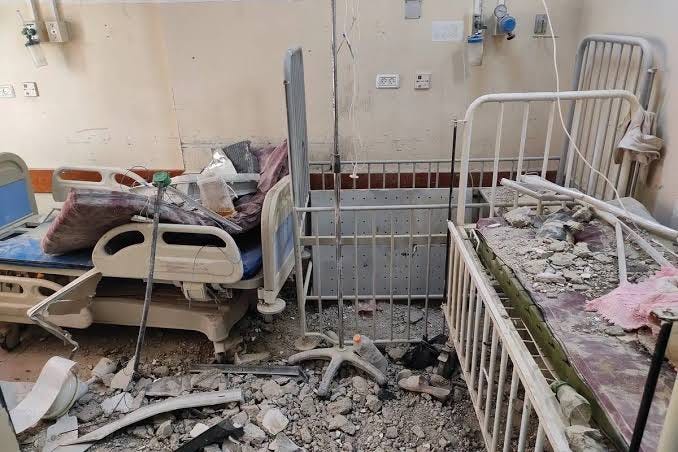
“The War on Hospitals”
Responsibility and evidentiary status: Israeli forces attacked, entered, surrounded, or forced the evacuation of hospitals, arguing that Hamas and other armed groups used some medical sites for military purposes. United Nations bodies, medical organisations, journalists, and human rights investigators questioned the evidence, necessity, and proportionality of many operations.
Hospitals possess special protection under international humanitarian law. That protection can be lost if facilities are used to commit acts harmful to the enemy, but the existence of military activity does not automatically justify unrestricted attack.
Damage to hospitals, maternity wards, generators, oxygen supplies, water systems, ambulances, operating theatres, and neonatal units contributed to the collapse of medical care.
Doctors performed surgery under extreme conditions, often without sufficient anaesthetic, antibiotics, blood supplies, sterile equipment, electricity, or clean water.
Patients were moved from intensive care units, operating theatres, and maternity wards during forced evacuations. Some could not be transported safely.
Premature and newborn babies faced particular risk when electricity, incubators, oxygen, medicine, and trained staff became unavailable. The destruction of maternity services also endangered pregnant women during labour and denied newborn children the care necessary for survival.
Attacks on medical infrastructure do not harm only those present during the immediate strike. They continue killing afterwards by removing the treatment required by wounded civilians, chronically ill patients, pregnant women, premature infants, and children suffering from malnutrition or disease.
Destroying the institutions that preserve life extends the consequences of military violence far beyond the moment of impact.
Conclusion: Evidence Without Accountability
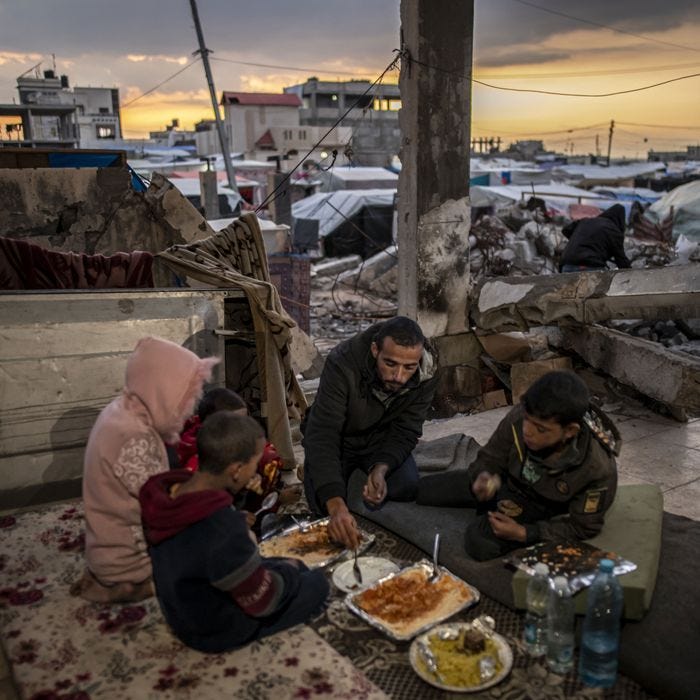
“Israel destroys Palestinian Survival”
The central question is not whether the Israeli state has a right to exist. States do not possess an unconditional right to preserve any political system they choose, particularly when that system denies another people equality, political freedom, territorial continuity, and the means of collective survival. The real question is whether Israel can continue to exist in its present, exclusively Zionist incarnation: a state that privileges Jewish nationality while denying the indigeneity, democratic rights, and national existence of the Palestinian people whose homeland it occupies and controls.
Israel presents itself as the Middle East’s only democracy; no genuine democracy can reserve decisive rights, territory, political power, and national belonging for one ethno-religious population while subjecting another population to occupation, dispossession, military rule, displacement, and exclusion. Elections among the privileged population do not transform permanent domination over another people into democracy. A system cannot claim democratic legitimacy while millions of Palestinians remain governed without equal citizenship, meaningful political representation, freedom of movement, or control over the land on which they live.
It includes massacres, forced displacement, physical and psychological torture, sexual violence, public humiliation, the killing of children and rescuers, shootings of civilians carrying white flags, starvation, medical deprivation, and repeated attacks on the institutions required for civilian survival. Taken together, the documented cases reveal a recurring pattern of dehumanisation and the systematic destruction of the conditions required for Palestinian survival.
The evidentiary record is not identical in every case. Some incidents are supported by video, medical testimony, satellite imagery, official admissions, court records, witness accounts, or human rights investigations. Others remain alleged, disputed, or incompletely investigated. That distinction must remain clear. Accuracy strengthens the record; it does not weaken it. Recognising uncertainty in one case does not invalidate documented evidence in another. Nor can official denial be treated as the final word when the authority issuing the denial controls the territory, the evidence, the military records, the detention facilities, and access to witnesses.
Taken together, these cases reveal more than a succession of unrelated tragedies. They expose a system in which Palestinian civilian life repeatedly receives less protection than military objectives, territorial ambitions, political ideology, and institutional self-preservation. Palestinian survival itself has become subordinate to the preservation of a state built upon Jewish political supremacy.
This did not begin with Benjamin Netanyahu. Netanyahu represents the most extreme and openly destructive expression of a political tradition that reaches back to the foundations of the Israeli state. From David Ben-Gurion onwards, successive Israeli governments have refused to recognise the Palestinian people as an equal national community entitled to the same rights, security, territory, and political freedom claimed by Jewish Israelis. Governments have differed in language, tactics, and presentation, but the underlying refusal has remained remarkably consistent. Palestinian villages were destroyed, and their inhabitants prevented from returning. Palestinian land was confiscated. Settlements expanded. Borders remained deliberately unresolved. Military occupation became permanent administration. Negotiations repeatedly demanded Palestinian recognition of Israel while withholding Israeli recognition of an equal Palestinian right to sovereignty and national existence. Netanyahu did not create this system. He stripped away its remaining disguises.
The persistence of violence also reflects the failure of international accountability. Investigations are delayed, obstructed, narrowed, or left to the institutions accused of wrongdoing. Political allies continue to provide weapons, diplomatic protection, and economic support. Governments express concern while opposing the measures that might impose restraints. Evidence accumulates, but consequences do not follow.
That absence of consequence is not separate from the violence. It is one of the conditions that allows the violence to continue. A massacre left unpunished becomes a precedent. Torture dismissed as an isolated incident becomes institutional practice. A blocked aid convoy becomes a method of coercion. An attack on a hospital becomes another disputed episode rather than a boundary that cannot be crossed. The system makes atrocity permanent by dividing responsibility until no institution accepts it. Soldiers blame orders; commanders invoke military necessity; governments cite security; allies deny influence; corporations describe themselves as suppliers; international bodies issue findings without enforcement. Palestinians are left to carry the consequences.
Israel’s continued impunity cannot be separated from its strategic value to the dominant Western powers. Britain helped create the political conditions for Zionist settlement under imperial rule. America later became Israel’s principal military, diplomatic, and financial protector. Israel offered Western governments a heavily armed regional ally, an intelligence partner, a market for weapons, and a dependable strategic foothold in a region whose peoples had repeatedly resisted foreign domination. This relationship explains why conduct that would bring sanctions, isolation, or intervention elsewhere has so often produced little more than carefully worded concern when carried out by Israel. Western support has protected Israel not simply as a country, but as an instrument of a wider regional order shaped by colonial borders, military intervention, resource competition, and the preservation of Western power. That protection has also enabled Israeli governments to postpone the political transformation that survival now demands.
The century-long Zionist project has failed on its own stated terms. It has not produced lasting security. It has not normalised Israel’s position in the region. It has not resolved the Palestinian question. It has not created peace between the river and the sea. It has produced recurring war, deepening militarisation, permanent occupation, international isolation, internal authoritarianism, and an expanding record of Palestinian dispossession. Military superiority cannot resolve a political injustice. It can suppress resistance, destroy cities, imprison populations, and delay accountability, but it cannot turn inequality into legitimacy. Nor can it erase a people who continue to understand themselves as belonging to the land from which they have been expelled or within which they remain confined.
Israel can endure only through transformation; history offers little reason for optimism. Its people, gripped by genuine historical traumas, must nonetheless reject the extremism of governments that promise security through domination and survival through Palestinian disappearance. The alternative is not the expulsion or destruction of Jewish Israelis. It is the abandonment of a political system that makes Jewish supremacy a condition of statehood.
A democratic future requires equal citizenship, equal political rights, equal protection under law, recognition of Palestinian indigeneity, the end of occupation and settlement expansion, accountability for crimes, and a just resolution for refugees and displaced communities. Whether that future takes the form of one state, two states, or another arrangement involves immense practical hurdles; none can claim legitimacy unless it rests upon the principle that no people can possess rights that depend upon denying those same rights to another.
Israel cannot permanently destroy Palestinian survival without also destroying the democratic and moral foundations of its own future.
The central question is no longer whether sufficient evidence exists. The record is extensive.
The question is whether evidence will ever be permitted to interrupt power, and whether Israeli society will act before the state created in its name makes equality impossible, permanent war unavoidable, and its own long-term survival increasingly uncertain.
Bibliography
Sources
The Nakba and historical massacres
Institute for Palestine Studies, “The Deir Yasin Massacre, 9 April 1948”
Institute for Palestine Studies, chronology of the Tantura massacre, May 1948
Institute for Palestine Studies, “Lydda, 9–13 July 1948”
Institute for Palestine Studies, “Al-Dawayima, 29 October 1948”
United Nations Security Council, Resolution 101 on the Israeli attack against Qibya, 24 November 1953
United Nations Relief and Works Agency for Palestine Refugees in the Near East, special report on the 1956 occupation of Gaza, including Khan Yunis and Rafah
United Nations, Yearbook extracts concerning the Khan Yunis and Rafah killings of 1956
Institute for Palestine Studies, “Kafr Qasim, 29 October 1956”
Palestinian refugee camps in Lebanon
Institute for Palestine Studies, “Tal al-Za‘atar Refugee Camp”
Institute for Palestine Studies, “Palestinian Refugees in Lebanon”
Institute for Palestine Studies, “Sabra and Shatila, 16–18 September 1982”
Institute for Palestine Studies, The Sabra and Shatila Massacres: Eye-Witness Reports
United Nations Security Council, Resolution 521 concerning the massacre of Palestinian civilians in Beirut, 19 September 1982
United Nations General Assembly, Resolution 37/123 concerning Sabra and Shatila, 16 December 1982
Government of Israel, Report of the Commission of Inquiry into the Events at the Refugee Camps in Beirut, Kahan Commission, 8 February 1983
Al-Aqsa and the occupied West Bank
United Nations Security Council, Resolution 672 concerning violence by Israeli security forces at Al-Haram al-Sharif, 12 October 1990
United Nations Security Council, Resolution 673 concerning Israel’s refusal to receive the United Nations mission, 24 October 1990
Human Rights Watch, Jenin: Israeli Defence Forces Military Operations, May 2002
Operation Cast Lead and white phosphorus
United Nations Human Rights Council, Report of the United Nations Fact-Finding Mission on the Gaza Conflict, A/HRC/12/48, 2009
Human Rights Watch, Rain of Fire: Israel’s Unlawful Use of White Phosphorus in Gaza, 25 March 2009
Amnesty International, Operation “Cast Lead”: 22 Days of Death and Destruction, July 2009
The 2014 Gaza war
Amnesty International and Forensic Architecture, “Black Friday”: Carnage in Rafah during the 2014 Israel/Gaza Conflict, July 2015
Amnesty International and Forensic Architecture, interactive reconstruction of “Black Friday” in Rafah
Great March of Return
United Nations Human Rights Office, report of the Commission of Inquiry on the 2018 protests in the occupied Palestinian territory
United Nations Human Rights Office, detailed findings of the Commission of Inquiry, A/HRC/40/CRP.2
United Nations Human Rights Office, “No Justification for Israel to Shoot Protesters with Live Ammunition,” 28 February 2019
Gaza since October 2023
Airwars, assessment of the 31 October 2023 Jabalia refugee camp strike
Reuters, “Gaza Hospital Blast: What We Know about the Explosion,” 18 October 2023
Reuters, Human Rights Watch assessment of the Al-Ahli Hospital explosion, 26 November 2023
Associated Press, “Palestinians Say Israeli Troops Fired at People Seeking Food,” 29 February 2024
Associated Press, medical evidence concerning the Flour Massacre, 1 March 2024
Associated Press, Israeli strike and fire at the Rafah tent camp, 28 May 2024
Associated Press, “How an Israeli Raid Freed Four Hostages and Killed at Least 274 Palestinians,” 10 June 2024
Associated Press, Al-Taba’een school strike, 10 August 2024
Detention, torture, and degrading treatment
Human Rights Watch, “Israel: Detainees Face Inhumane Treatment,” 23 July 2024
Human Rights Watch, “Israel: Palestinian Healthcare Workers Tortured,” 26 August 2024
Physicians for Human Rights Israel, Systematic Violation of Human Rights: The Incarceration Conditions of Palestinians in Israel Since October 7
Physicians for Human Rights Israel, “Sexual and Gender-Based Violence Committed by Israeli Military and Security Forces against Palestinians in Israeli Prisons,” 7 March 2024
Physicians for Human Rights Israel, Unlawfully Detained, Tortured, and Starved: The Plight of Gaza’s Medical Workers in Israeli Custody, February 2025
Children, white flags, hospitals, and systematic civilian harm
United Nations Independent International Commission of Inquiry, detailed findings concerning attacks since 7 October 2023, A/HRC/56/CRP.4, June 2024
United Nations Independent International Commission of Inquiry, report on sexual, reproductive, and other gender-based violence, A/HRC/58/CRP.6, March 2025
United Nations Independent International Commission of Inquiry, Legal Analysis of the Conduct of Israel in Gaza Pursuant to the Genocide Convention, A/HRC/60/CRP.3, September 2025
United Nations Independent International Commission of Inquiry, report on the deliberate targeting and systematic harm of Palestinian children, A/HRC/62/CRP.2, June 2026
Starvation, hospitals, and humanitarian conditions
United Nations Office for the Coordination of Humanitarian Affairs, Humanitarian Situation Update 306: Gaza Strip, 16 July 2025
World Health Organisation, “Women and Newborns Bearing the Brunt of the Conflict in Gaza,” 3 November 2023
World Health Organisation, evacuation of premature infants from Al-Shifa Hospital, 19 November 2023
Human Rights Watch, Extermination and Acts of Genocide: Israel Deliberately Depriving Palestinians in Gaza of Water, December 2024
Aid-distribution killings
Associated Press, “What We Know about Shootings near Gaza Aid Sites,” 4 June 2025
Reuters, “UN Reports 798 Deaths near Gaza Aid Hubs in Six Weeks,” 11 July 2025
Reuters, “UN Says 875 Palestinians Have Been Killed near Gaza Aid Sites,” 15 July 2025
Further Reading
Walid Khalidi, ed., All That Remains: The Palestinian Villages Occupied and Depopulated by Israel in 1948. Institute for Palestine Studies, 1992.
Ilan Pappé, The Ethnic Cleansing of Palestine. Oneworld Publications, 2006.
Rashid Khalidi, The Hundred Years’ War on Palestine. Metropolitan Books, 2020.
Noura Erakat, Justice for Some: Law and the Question of Palestine. Stanford University Press, 2019.
Norman G. Finkelstein, Gaza: An Inquest into Its Martyrdom. University of California Press, 2018.
Jasbir K. Puar, The Right to Maim: Debility, Capacity, Disability. Duke University Press, 2017.
This is a series of complete work
Part I asks what happened after civilians were killed: who was responsible, what explanation followed, whether an investigation occurred and whether punishment matched the harm. Part II changes the central question: what happens when violence becomes embedded in detention systems, food access, hospitals, evacuation routes and the conditions necessary for ordinary life? Part III draws examples from a thin record and presents the larger chronology supporting the first two essays.
Refuse the comfort of indifference.
Silence and distraction benefit entrenched power. Independent writing survives only when readers choose to sustain it.
If this analysis matters to you, please subscribe, share it, and, importantly, restack it. My writing survives when readers help carry it forward.