

The Language That Protects
How the Australian Labor Party’s Evasion of Alleged Israeli Crimes Undermines Political Trust

This essay is part of my broader work on empire, democracy, war, law, nationalism, and power. These themes are explored in my books, focusing on how power masquerades as freedom but results in exclusion, violence, inequality, and control.
Related books
Available in paperback and ebook:
The Colonial Century: Israel, Palestine, and the Modern Architecture of Settler Power
https://books2read.com/u/4XGyMN
The Doomsday Clock is Ticking: Modern War Made Invisible, Profitable, and Permanent
https://books2read.com/u/b65vy0
Liberty and Power: The Promise and Paradox of American Power
https://books2read.com/u/31zKka
My latest book traces the historical forces that transformed an inhabited land into a system of displacement, occupation, fragmentation, and unequal rule.
Palestine: 78 Years of Dispossession, a Century of Violent Displacement https://books2read.com/u/ba8wBL
Prologue
“Between the idea
And the reality
Between the motion
And the act
Falls the Shadow”
T.S. Eliot (1888-1965), “The Hollow Men”
A Reckoning, with Necessary Acknowledgment
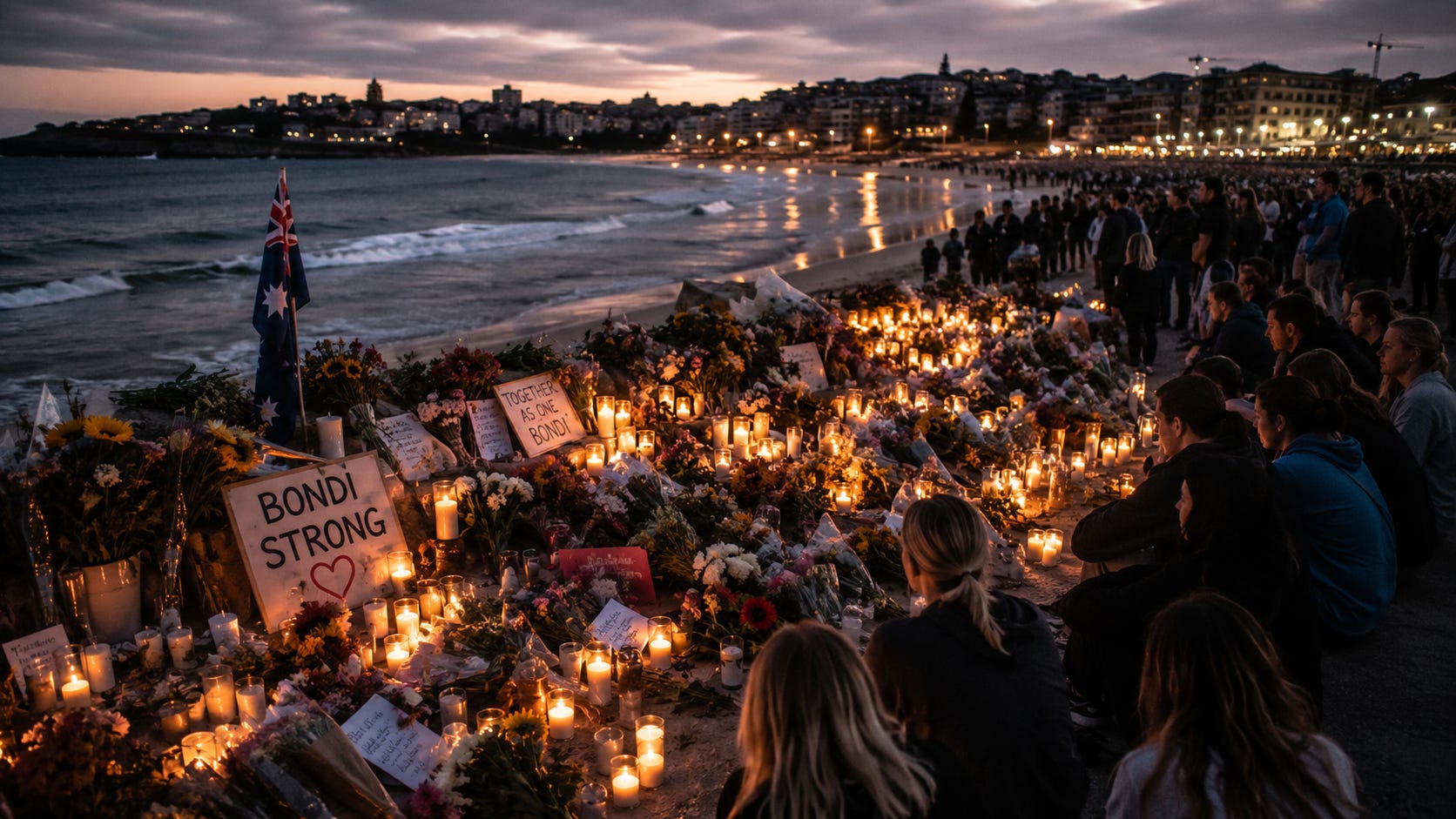
“Candlelight memorial on Bondi Beach.”
The Australian government of the day, the Australian Labor Party, expresses concern for Palestinians, but this means little without sanctions, transparency, and consequences for Israel’s impunity.
Before this essay says anything more about Israel, it must say something about antisemitism. On 14 December 2025, two gunmen, identified by police as a father and son, 50-year-old Sajid Akram and 24-year-old Naveed Akram, opened fire on a Hanukkah gathering at Bondi Beach. Fifteen victims were killed, including a 10-year-old girl, two rabbis, and a Holocaust survivor. More than forty others were wounded or injured, including two police officers. Police fatally shot the father at the scene; the son was critically injured and taken into custody. Authorities classified the shooting as a terrorist incident. The gathering, attended by around 1,000 people, was targeted because it was Jewish during a public festival of light and resilience. The grief that followed was profound, and the fear it left behind endures. No critique of Israel can be legitimate that fails to recognise that Jewish Australians are not Israel, that antisemitism is a real and lethal force, and that the safety of Jewish communities is non-negotiable.
The essay is not about Jewry or Judaism. It is about the conduct of an apartheid government in Israel that has been accused of serious war crimes, crimes against humanity, torture, and sexual assault of prisoners, and whose senior ministers have repeatedly used dehumanising language about Palestinians. The accusations are not fringe. They come from the field and from the most sober international bodies.
On 18 June 2026, the United Nations Independent International Commission of Inquiry on the Occupied Palestinian Territory, including East Jerusalem, and Israel released its latest Conference Room Paper. It documented systematic acts of sexual violence, torture, and degrading treatment of Palestinian detainees by Israeli military and security forces. It names patterns that constitute crimes against humanity. Before that, in 2024, Amnesty International concluded that Israel was committing genocide against Palestinians in Gaza. Human Rights Watch published detailed findings of starvation as a weapon of war, forced displacement, and deliberate attacks on civilian infrastructure. The International Court of Justice found a plausible risk of genocide. The International Criminal Court Prosecutor sought arrest warrants for senior Israeli leaders.
The language coming from inside the Israeli government goes further still. In December 2023, Israeli Minister for National Security Itamar Ben-Gvir declared that “the enemy is not the Palestinian people; it’s Hamas, but the Palestinian people who support Hamas should be treated accordingly.” In November 2023, Minister for Heritage Amichai Eliyahu publicly stated that dropping a nuclear bomb on Gaza was “one of the possibilities.” In February 2024, Minister of Finance Bezalel Smotrich said of Palestinians, “We need to make them disappear, the ones who are against us—kill them, and whoever remains will have to live in fear.” In October 2024, Prime Minister Benjamin Netanyahu, addressing the Knesset, described the war as “a battle between the children of light and the children of darkness, between the human and the animal.” These are not slips. They are a government lexicon that classifies an entire population as killable.
Against this record, the question is not whether Australia can solve the Middle East. It is a question of whether the Australian Labor Party, when confronted with allegations of such gravity, will speak and act with the clarity the evidence demands. This essay argues that it has not, and that the gap between its moral language and its material consequences has become a breach of political trust.
I once admired Senator Penny Wong and the Australian Labor Party. That admiration rested on a belief that Labor, at its best, carried an inheritance larger than electoral arithmetic: fairness, international law, anti-racism, human dignity. For families like mine, who voted Labor across generations, the party represented the expectation that when power harms the vulnerable, it would at least name the harm clearly and refuse to become its accomplice. That expectation is now under severe strain, and Palestine has become the test.
The Anatomy of Evasion

“Penny Wong: Minister for Foreign Affairs of Australia”
Evasion is not unusual in politics; it is routine. Ministers often avoid the question asked by answering the question they would prefer to have received. They shift from substance to process, from allegation to tone, from responsibility to complexity, from the named perpetrator to “all parties,” and from consequences to the language of continued engagement. In ordinary political disputes, this may be dismissed as the familiar theatre of Question Time. But when the subject is genocide, torture, sexual assault, unlawful detention, collective punishment, and the treatment of Australian citizens by a foreign military, such evasion ceases to be mere political technique. It becomes morally revealing: a deliberate choice to obscure responsibility when clarity is most urgently required.
The pattern is visible in Senator Penny Wong’s own parliamentary language. When Senator Mehreen Faruqi accused the government of complicity in Israel’s genocide in Gaza, Wong did not answer the charge directly. She said the Greens were engaging in “misinformation,” returned to the general formula that Australia calls on “all parties” to observe international humanitarian law, and accused the Greens of “raising the heat.” The language moved away from the specific allegation and back into a managed vocabulary of balance, process, and restraint.
That shift matters. A question about genocide became a question about tone. A question about state violence became a question about parliamentary conduct. A question about Australian responsibility became a reply about “all parties.” The effect was not simply to reject Faruqi’s framing. It was to avoid the legal and moral weight of the word at the centre of the question.
The same pattern appeared when Wong was asked directly whether she believed the claims of sexual abuse made by Australian flotilla participants. Her answer moved in two directions at once. She said her “principled position” was to always believe women when allegations of sexual assault are made, and described the allegations as “terrible” and “horrific.” Yet she also avoided a direct answer on the specific claims, saying there was a difference between having allegations reported and using them in a Senate estimates hearing, and that she had difficulty responding to “specific private details in a public forum like this.” She then returned to the process: the government had “made representations to Israel.”
That response is revealing because it acknowledges the gravity of the allegations without accepting the political consequence that should follow. Wong did not dismiss the women. She appeared inclined to believe women who make claims of sexual abuse. But the answer still moved away from the central question: if Australian citizens allege sexual assault, torture, and degrading treatment by Israeli forces, what will Australia do beyond making representations?
The same pattern appeared when Faruqi raised previous claims that Australians on a Gaza flotilla had been kidnapped in international waters, abused, tortured, punched, spat on, denied medication, and denied access to a lawyer. Wong’s answer again retreated into procedure. She said the government would provide consular support to Australians “wherever we can” and that humanitarian aid should flow into Gaza. The answer did not include the word “kidnapping.” It did not name the alleged perpetrators in any active sense. It did not say what consequence would follow if Australian citizens were unlawfully detained or mistreated by Israeli forces.
Something happens in those exchanges. Questions about torture, sovereign protection, and alleged crimes against Australian citizens become questions about process. The victim disappears. The state responsible remains unnamed in any active sense. The Australian government, by speaking as though the machinery of diplomacy is the only tool available, signals that no material consequence will follow. If the same treatment were alleged against citizens by a less allied state, Iran, Russia, or China, the reaction would be different. The verbs would harden.
The same pattern appears in exchanges with Senator David Shoebridge. Questions about torture, assault, sexual abuse, consular access, and sovereign protection become questions about representations, expectations, investigations, and procedure. This is the anatomy of evasion: acknowledge enough to appear responsible, but not enough to impose consequences.
That is the anatomy. Acknowledge suffering but limit consequences. Recognise distress but avoid structural accusation. Condemn extremist individuals but refuse to confront the state machinery that enables them. Speak the language of law while resisting the measures the law might require. When direct questions are asked about genocide, racism, unlawful detention, and the treatment of Palestinians and Australian citizens, the response retreats into procedural language: all parties must comply with international law, humanitarian access is needed, peace remains the goal, and consular support will be provided where possible. Those phrases may be accurate, but they are politically inadequate. They are not cautious. Caution is pausing to verify. This is the management of appearances while preserving the fundamental relationship unchanged.
The Government’s Defence, and Where It Fails
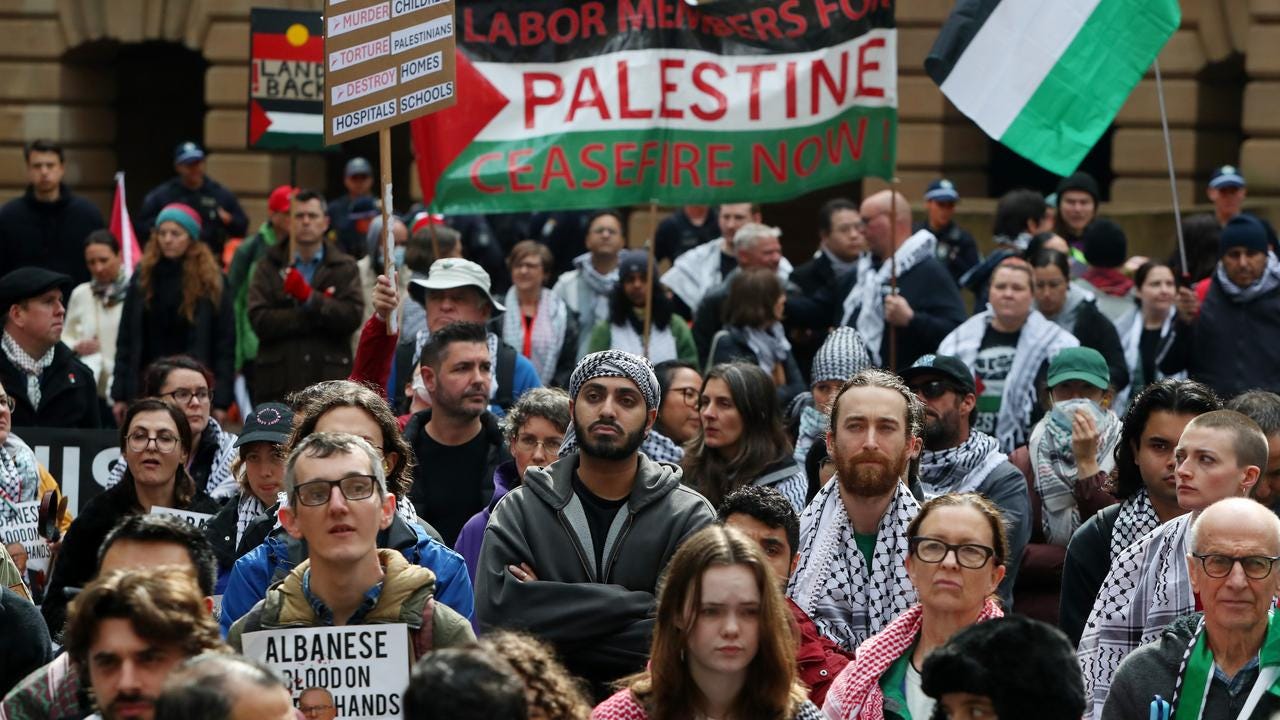
“Palestine matters.”
The counterargument deserves its strongest form. Wong and the government would likely argue that direct confrontation with Israel could close diplomatic and consular channels, reduce Australia’s limited access, invite retaliation, and achieve little for Palestinians. They would point to measures already taken: restoring funding to the United Nations Relief and Works Agency for Palestine Refugees in the Near East, increasing humanitarian assistance, sanctioning extremist settlers and two Israeli ministers, formally recognising the State of Palestine in September 2025, and supporting the independence of the International Criminal Court and the International Court of Justice. These actions are not meaningless, and the government could reasonably claim that they exceed those taken by previous Australian governments.
The defence nevertheless collapses at the point where words must become material consequences. Australia has not imposed comprehensive sanctions on Israel, established a transparent two-way arms embargo, suspended defence cooperation, ended procurement from Israeli weapons manufacturers, or used trade and investment as instruments of pressure. Department of Foreign Affairs and Trade figures show that Australian goods and services trade with Israel exceeded A$1.2 billion in 2025, including A$42.7 million in imports classified as arms and ammunition. Australia’s official country brief also states that cooperation with Israel in defence, national security, and cyber security continues to develop. The government denies supplying weapons directly for use in Gaza, but secrecy surrounding export permits, multinational weapons supply chains, and defence contracts prevents the public from independently testing that assurance.
The problem is not that Australia has done nothing. It is that the government has largely selected measures that impose little direct cost on the Israeli state while avoiding those capable of altering its calculations. Humanitarian aid treats suffering after it has been inflicted. Recognition affirms Palestinian rights but does not protect Palestinians from bombs, detention, starvation, or displacement. Sanctions against several extremists isolate individuals while leaving the governmental, military, and economic machinery intact. Meaningful punishment remains reserved for weaker states and official enemies.
That restraint becomes harder to defend as the legal and evidentiary record grows. The International Court of Justice has recognised the plausible rights of Palestinians in Gaza under the Genocide Convention and ordered provisional measures because of the real and imminent risk of irreparable prejudice to those rights. The International Criminal Court has issued arrest warrants for Benjamin Netanyahu and Yoav Gallant after finding reasonable grounds to believe that they bore responsibility for war crimes and crimes against humanity. United Nations investigations have documented torture and physical, psychological, sexual, and gender-based violence against Palestinians in Israeli custody.
The gap between Australia’s language of “concern” and the gravity of this record is now indefensible. A foreign policy that condemns atrocities while preserving trade, military relationships, and financial flows places money and alliance management above human life. Diplomacy that never escalates into material pressure does not restrain the perpetrator. It reassures the powerful, performs concern for domestic audiences, and allows the violence to continue at little political or economic cost. Continued engagement then ceases to be a strategy for influence; it becomes a form of permission.
Quiet diplomacy may be defensible as a temporary instrument, but not as a permanent substitute for action. It asks the public to trust private pressure while conditions deteriorate, victims are denied accountability, and Australian citizens are directly harmed. After years of worsening violence, the claim that silence preserves influence is no longer persuasive. Silence does not protect; it emboldens.
What the Story Leaves Out
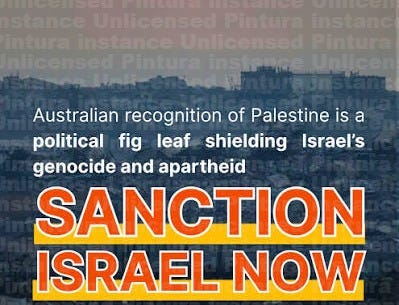
“Missing pieces”
Three missing pieces must be named.
First, the voice of Palestinian Australians. They largely appear as objects of humanitarian concern rather than as political agents with a right to justice. Palestinian Australian families have lost relatives in Gaza. Palestinian Australian doctors and aid workers have returned with testimonies that match the international record. Their demand is for accountability. When the government refuses the vocabulary of accountability, it tells a community that its dead are grievable in theory but not in policy.
Second, the internal machinery of the Labor Party. Wong operates within a Cabinet and caucus that contain strong pro-Israel voices, a Prime Minister whose office must weigh any shift on Israel against the risk of destabilising the Five Eyes intelligence alliance, especially with Washington, and factional realities that make any sharp break costly. The disciplined language may be less a personal choice than a signal of where the party’s centre of gravity sits. Naming this does not excuse the evasion; it locates the pressure that produces it.
Third, the United States. Australia’s Israel policy cannot be understood without the alliance architecture, intelligence sharing, and military technology integration that make it difficult to maintain an independent stance. This is not a justification. It is an explanation that must be confronted. Labor is cautious not only because of Israel, but because of what Canberra calculates a serious rupture would cost in Washington.
The Cost of Selectivity
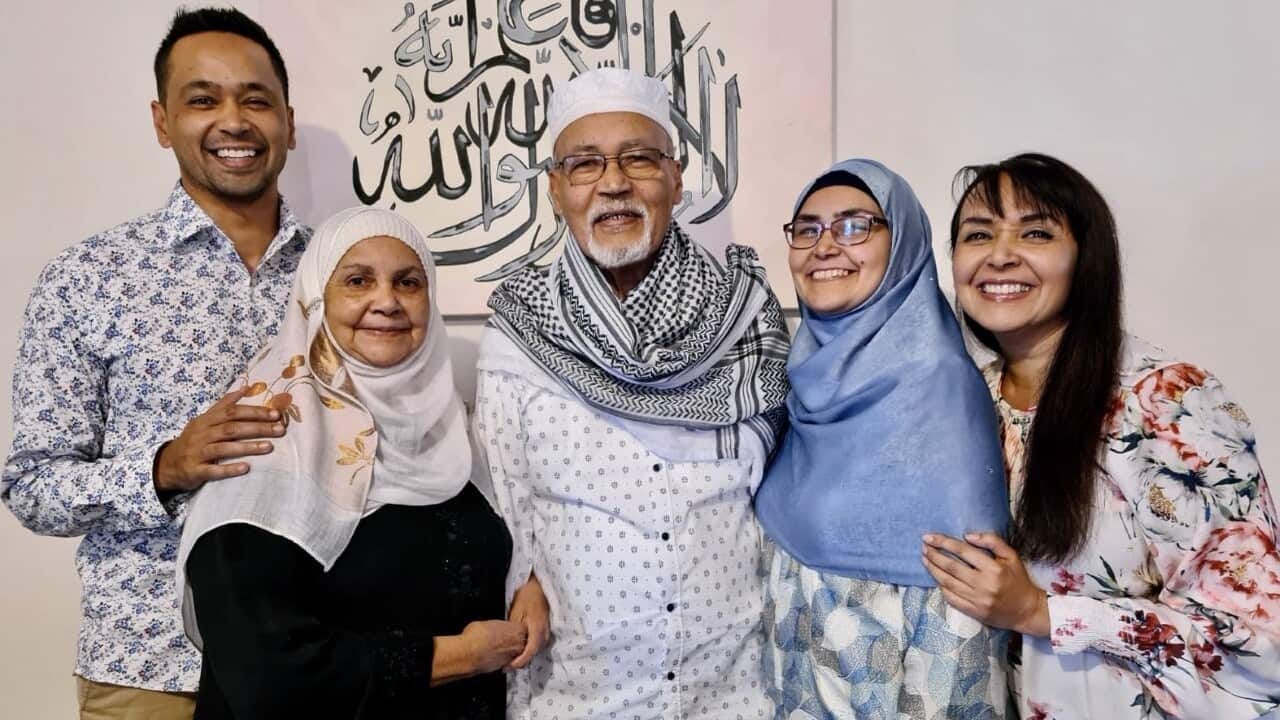
“Eighty per cent of Muslims in Australia say they have experienced discrimination”
Selectivity corrodes the claim that international law is universal. It tells the Global South that the rules-based order is not a system of equal obligations, but a hierarchy of enforcement in which powerful states and their allies receive exemptions denied to others. At home, that double standard deepens political cynicism.
For younger voters, Muslim and Arab Australians, and progressives who have knocked on doors for Labor, the government’s evasion on Palestine has become a test of the party’s willingness to sacrifice principle for power. It merges with memories of asylum-seeker policy, disillusionment over climate ambition, and the suspicion that Labor’s moral language belongs more readily to election campaigns than to government. The party that once spoke for the underdog is increasingly perceived as protecting the powerful whenever honesty carries a political or diplomatic cost.
The argument’s fragility must nevertheless be acknowledged. Not all voters expect the government to confront Israel. A significant part of the electorate values the relationship and regards stronger language or punitive action as reckless. What appears to one constituency as moral evasion may appear to another as responsible statecraft. The criticism therefore depends partly on the belief that Labor remains committed to internationalism, anti-racism, and the protection of the vulnerable. If its leadership no longer accepts those principles as defining obligations, the disillusionment remains justified, but the dispute becomes more fundamental: it concerns not merely what Labor has done, but what the party has become.
Here, the Bondi Beach massacre returns with a clarifying demand. The distinction between antisemitism and opposition to Israeli state violence is not a rhetorical nicety; it is the moral foundation of the entire argument. Jewish Australians gathered at Bondi to celebrate Hanukkah were targeted and murdered as Jews. They did not represent the Israeli government, nor did they bear responsibility for its conduct. To obscure that antisemitic horror while demanding clarity about violence against Palestinians would reproduce the same moral evasion in reverse.
Consistency requires every form of dehumanisation to be confronted, whether it comes from governments, racial hatred, religious extremism, or political ideology. Israeli officials who portray Palestinians as less than human and terrorists who murder Jewish civilians commit different acts, but both rely on the same poisonous idea: that a person’s identity can erase their innocence and make them a legitimate target.
The Difference Between Caution and Complicity
“More than unfortunate”
Language in this context is not secondary to action. It is an active distribution of protection and exposure. To say “humanitarian catastrophe” while avoiding “war crimes” or “apartheid” is to assign Palestinian suffering to the domain of misfortune rather than illegality. It removes the agent. It softens the imperative for sanctions.
The UN Commission of Inquiry’s June 2026 paper uses the language of crimes against humanity: systematic sexual violence, torture, degrading treatment, and extermination. Amnesty International and Human Rights Watch have each produced reports that match that framing. When a government acknowledges distress but refuses the legal vocabulary that the evidence supports, it is not being neutral. It is managing a contradiction. The contradiction is this: Australia wants to be seen as a principled actor in the rules-based order while continuing to treat as a friend a state whose senior ministers talk publicly of killing populations and whose military forces are credibly accused of carrying it out.
Caution waits for evidence, then acts. Complicity, or its milder cousin, avoidance, has the evidence and still behaves as though preserving the relationship with the state inflicting the harm must remain the central priority. Labor’s technique is subtler and more revealing. It allows the government to appear humane while remaining materially aligned with the status quo. But the status quo is not neutral. According to the most serious legal findings in a generation, it is the catastrophic collective punishment of a civilian population: proven discrimination, credible genocide, continuing dispossession, and the systematic destruction of Palestinian life. The governing Labor Party’s refusal to impose consequences is not an exercise of caution. It is policy. Structural constraints do not remove agency; they define the cost of exercising it, and leadership means absorbing that cost when the moral stakes are this high.
Toward a Politics of Consequence
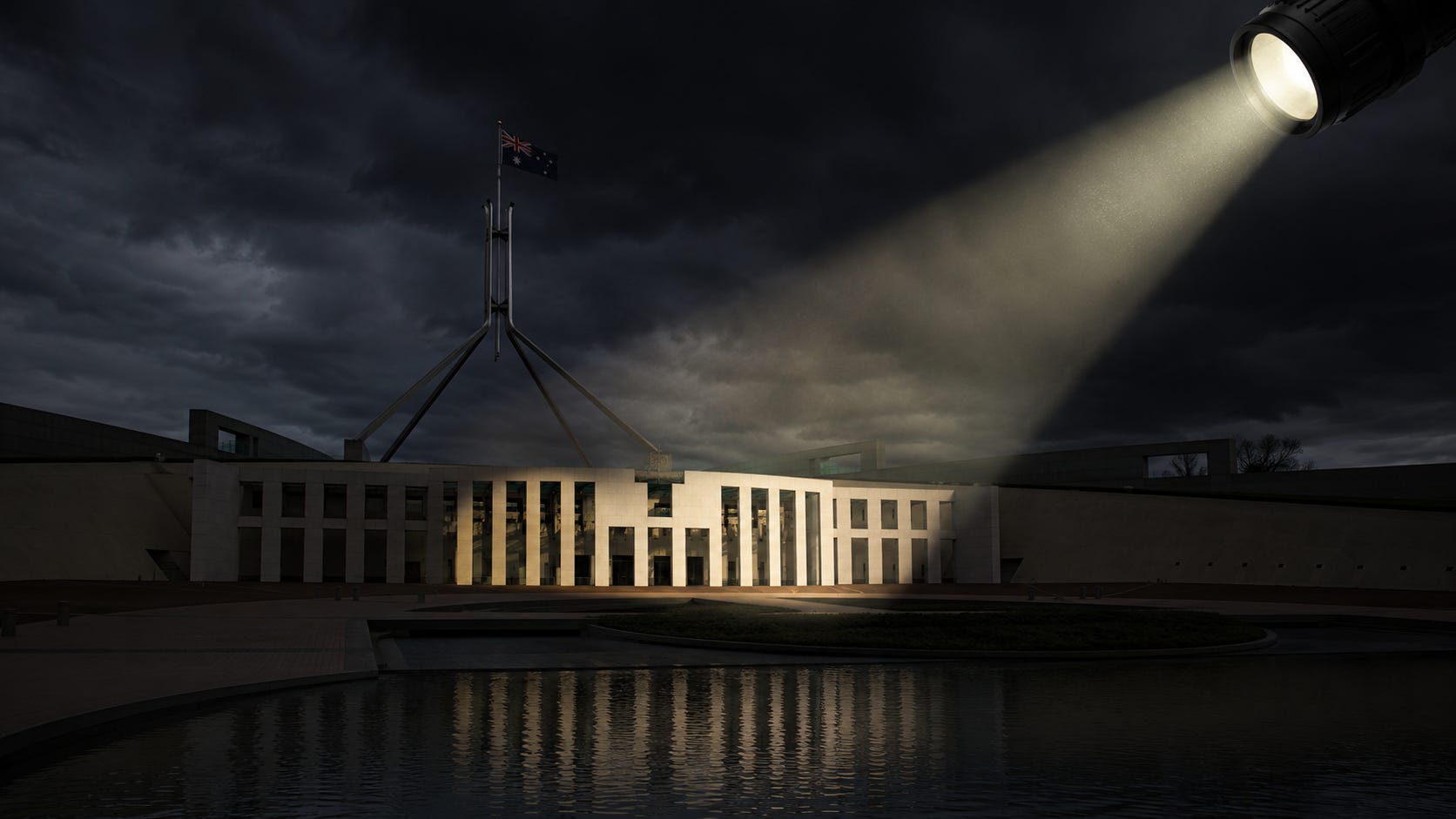
“The question is no longer whether Australian Labor is concerned. The question is whether concern will lead to consequence.”
What would it look like for Labor to move from concern to consequence? It would require consistency between the values the party claims and the levers it is prepared to pull.
Concretely, it would require full transparency over military-linked supply chains, including any components, technologies, approvals, or exports from Australia that may contribute to systems used in alleged violations. It would require direct answers to parliamentary questions about Australian citizens detained or mistreated by Israeli forces, without the shelter of a procedural script. It would require a vocabulary that matches the legal gravity of the record, not as a slogan, but as a truthful description of what is being done and to whom. It would require sanctions applied not only to visible extremist settlers, but to individuals, entities, settlement organisations, military-linked companies, and government figures credibly connected to dispossession, incitement, unlawful violence, annexation, or the machinery of occupation. That evidence is no longer confined to activists or campaigners; it has been documented by the United Nations Commission of Inquiry, the International Criminal Court, the International Court of Justice, and major human rights organisations.
It would also require a genuine commitment to listening to Palestinian Australians as bearers of rights, not merely as witnesses to grief, and to Jewish Australians as people entitled to safety from antisemitic violence, without conflating that safety with the defence of Israeli state power. The Bondi massacre and the destruction of Gaza are not equivalent. They are distinct horrors, each demanding its own clarity, its own mourning, and its own accountability. A government that cannot hold both demands simultaneously, condemning antisemitic terror without hesitation while confronting Israeli state violence with consequences, has not yet earned the trust it claims.
This is not an abstract distinction. Labor has created institutional machinery to combat antisemitism, including Australia’s Special Envoy to Combat Antisemitism. Antisemitism is real and must be confronted without hesitation. There is also now a Special Envoy to Combat Islamophobia. But there is still no equivalent national office dedicated specifically to anti-Palestinian racism, despite Palestinians and their supporters facing vilification, surveillance, professional risk, political suspicion, and public hostility for speaking about Gaza, occupation, dispossession, and genocide.
That absence matters. Palestinians are not harmed only because they are Muslims. Many Palestinians are Muslim, but Palestinian identity is national, historical, cultural, and political. Anti-Palestinian racism operates through denial: denial of history, denial of dispossession, denial of statehood, denial of grief, denial of speech, and denial of the right to name what is being done to them. To fold anti-Palestinian racism into broader Islamophobia or social cohesion language is to blur the specific harm that must be named.
That recognition must lead to consequences. Serious consideration of sanctions is not radical. It is one of the legitimate tools available to states when confronted with credible evidence of war crimes, crimes against humanity, apartheid, collective punishment, unlawful occupation, settlement expansion, forced displacement, and genocide. Australia has used sanctions against other states and actors accused of grave violations. Refusing to consider them seriously when the state involved is Israel exposes the double standard at the centre of Labor’s policy.
Sanctions would not replace diplomacy; they would mark the point at which diplomacy ceases to be a substitute for accountability. They should target individuals and entities credibly connected to dispossession, incitement, unlawful violence, annexation, settlement expansion, detention abuses, or the military and administrative machinery of occupation. They should be paired with full transparency over Australian components, technologies, exports, approvals, and defence-linked cooperation that may assist Israeli military operations. A government that recognises Palestine while refusing to impose costs on those destroying the conditions of Palestinian life is not applying balance. It is preserving impunity.
The disillusionment described here does not require a revolutionary transformation. It requires Labor to stop treating Palestinian suffering as an object of managed sympathy and confront it as a test of whether its moral language still carries political force. The experience of apartheid South Africa demonstrates that sanctions, divestment, diplomatic isolation, and sustained international pressure can impose real costs on a state that refuses to change. These measures did not end apartheid by themselves, but they strengthened internal resistance, weakened the regime’s legitimacy, and made continued repression increasingly difficult to sustain.
Australia cannot plausibly argue that material pressure is either futile or merely symbolic. Recognition without sanctions allows the government to affirm Palestinian rights while preserving the relationships that help Israel violate them. Labor’s credibility has not yet been entirely lost, but it is eroding. The widening gap between recognition and consequence now defines public trust, from Gaza to Bondi. The question is whether the government will close that gap or continue to govern within it.
Sources
Australian government policy and parliamentary record
Parliament of Australia. Senate Hansard, Questions Without Notice: Middle East, 12 March 2026. Exchange between Senator Mehreen Faruqi and Foreign Minister Penny Wong concerning Gaza, genocide, international humanitarian law, and alleged government complicity.
Parliament of Australia. Senate Estimates Hansard, Foreign Affairs, Defence and Trade Legislation Committee, 4 June 2026. Questions concerning allegations of sexual assault and mistreatment made by Australian flotilla participants.
Parliament of Australia. Senate Estimates Hansard, Foreign Affairs, Defence and Trade Legislation Committee, 10 October 2025. Questions concerning the detention, treatment, legal access, and consular protection of Australian citizens held by Israel.
Department of Foreign Affairs and Trade. Israel Country Economic Fact Sheet, 2025. Australian trade with Israel, including A$292.3 million in exports, A$935.6 million in imports, and A$42.7 million in imports classified as arms and ammunition.
Department of Foreign Affairs and Trade. Israel Country Brief. Australia’s diplomatic, commercial, defence, national security, technological, and cyber security relationship with Israel.
Penny Wong, Minister for Foreign Affairs. Press Conference, Adelaide, 15 March 2024. Australia’s restoration of funding to the United Nations Relief and Works Agency for Palestine Refugees in the Near East.
Penny Wong, Minister for Foreign Affairs. Human Rights Sanctions in Response to Israeli Settler Violence in the West Bank, 25 July 2024. Targeted financial sanctions and travel bans were imposed on seven Israeli settlers and on one settler organisation.
Penny Wong, Minister for Foreign Affairs. Press Conference, Canberra, 11 June 2025. Sanctions imposed on Israeli ministers Itamar Ben-Gvir and Bezalel Smotrich over serious human rights violations connected with West Bank settler violence.
Anthony Albanese, Prime Minister, and Penny Wong, Minister for Foreign Affairs. Australia Recognises the State of Palestine, 21 September 2025.
Department of Foreign Affairs and Trade. About Australian Sanctions. Explanation of sanctions as measures intended to impose costs, limit harm, and address situations of international concern without armed force.
Bondi Beach, antisemitism, and racism in Australia
New South Wales Parliament, Committee on Law and Safety. Measures to Prohibit Slogans That Incite Hatred, January 2026. Records the 14 December 2025 terrorist attack on the Bondi Beach Hanukkah celebration, in which fifteen people were killed, and more than forty were injured.
Waverley Council. Honouring the Victims of the Bondi Beach Terror Attack, 19 December 2025.
Australian Government. Special Envoy to Combat Antisemitism, 9 July 2024.
Prime Minister of Australia. Press Conference on the Special Envoy to Combat Islamophobia, 12 September 2025.
Australian Human Rights Commission. Seen and Heard: Understanding Racism Experienced by Jewish, Muslim, Palestinian, Arab and Israeli Communities in Australia, 2026.
Australian Human Rights Commission. Racism and Racial Discrimination in Australia, 2026. Documents rising antisemitism, Islamophobia, anti-Arab racism, and anti-Palestinian racism.
International law and human rights findings
International Court of Justice. Application of the Genocide Convention in the Gaza Strip: Order of 26 January 2024.
International Court of Justice. Summary of the Order of 26 January 2024. The Court found plausible the rights of Palestinians in Gaza to protection from acts prohibited under the Genocide Convention and ordered provisional measures.
International Criminal Court. Situation in the State of Palestine: Arrest Warrants for Benjamin Netanyahu and Yoav Gallant, 21 November 2024.
United Nations Independent International Commission of Inquiry. “More Than a Human Can Bear”: Israel’s Systematic Use of Sexual, Reproductive and Other Forms of Gender-Based Violence Since 7 October 2023, 13 March 2025.
United Nations Independent International Commission of Inquiry. Legal Analysis of the Conduct of Israel in Gaza Pursuant to the Genocide Convention, 16 September 2025. Includes findings concerning rape, sexualised torture, detention abuse, destruction of healthcare, and genocidal intent.
United Nations Independent International Commission of Inquiry. “The Essence of Childhood Has Been Destroyed”: Israel’s Deliberate Targeting of Palestinian Children, 18 June 2026.
United Nations Special Rapporteur on the Occupied Palestinian Territory. Torture and Genocide, 2026.
Amnesty International. “You Feel Like You Are Subhuman”: Israel’s Genocide Against Palestinians in Gaza, 5 December 2024.
Human Rights Watch. Extermination and Acts of Genocide: Israel Deliberately Depriving Palestinians in Gaza of Water, 19 December 2024.
Human Rights Watch. World Report 2026: Israel and Palestine.
Sanctions and apartheid South Africa
United Nations. The United Nations: Partner in the Struggle Against Apartheid. Chronology of diplomatic isolation, the arms embargo, cultural and sporting boycotts, and economic pressure directed against apartheid South Africa.
United Nations. The Struggle Against Apartheid: Lessons for Today’s World. Discussion of international mobilisation, sanctions, civil-society pressure, and the internal liberation struggle.
Further Reading
Noura Erakat, Justice for Some: Law and the Question of Palestine, Stanford University Press, 2019.
Rashid Khalidi, The Hundred Years’ War on Palestine: A History of Settler Colonial Conquest and Resistance, 1917–2017, Metropolitan Books, 2020.
Antony Loewenstein, The Palestine Laboratory: How Israel Exports the Technology of Occupation Around the World, Scribe, 2023.
Audie Klotz, Norms in International Relations: The Struggle Against Apartheid, Cornell University Press, 1995.
John Dugard, Confronting Apartheid: A Personal History of South Africa, Namibia and Palestine, Jacana Media, 2018.
Refuse the comfort of indifference.
Silence and distraction benefit entrenched power. Independent writing survives only when readers choose to sustain it.
If this analysis matters, don’t just like it; share it, restack it. My writing survives when readers help carry it forward.